The “Revolution” of Operational Art
The Transparent Battlefield, the Migration of Deep Operation, and the Character of the Next War
September 25, 2026
Rudolf Prikryl
Preface
We would be powerless to achieve the aims of the present if we failed to go beyond the limits of historical experience, if we failed to reassess it from the perspective of the new conditions of our era, and if we did not mercilessly discard all that was time-worn and stale. G. S. Isserson, 1936
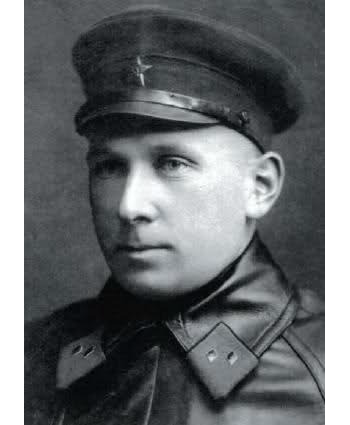
Brigade Commander Isserson warned against treating any operational proposition as a “ready-made scheme.” He insisted that the evolution of operational art must be derived anew from each era’s material and political conditions. That insistence is the only aspect of his work treated here as lasting. Everything else, including his concept of the deep operation itself must be subjected to the same critical scrutiny he applied to the Napoleonic paradigm and to the linear attrition of 1914–1918.
Two current wars furnish the primary evidence for this exercise of scrutiny. The first is the Russo-Ukrainian War, which began with Russia’s full-scale invasion of Ukraine in February 2022 and which, as of this writing in early 2026, continues without operational resolution along a 1,000km front, now running longer than the duration of Eastern Front operations during the Second World War. The second is the Iranian-US/Israeli conflict that erupted in June 2025 with Operation Rising Lion and expanded into a broader regional war by early 2026. These conflicts differ enormously in geography, political character, and the correlation of forces, yet they begin to blend, and share a common underlying condition: in both, the material and technological environment of combat has again transformed the relationship between the offense and the defense, between fire and movement, and between the front and the depth, in ways that compel a re-examination of operational categories Commander Isserson established.
For the purposes of this analysis of the science of war, I write as a neutral observer. When I examine Russian adaptation, I do so with the same detachment that Isserson applied to the German offensives of 1918 recognizing ingenuity where it exists, diagnosing failure where it persists, and refusing to conflate tactical learning with operational success. The same standard applies to Ukrainian drone innovation, Iranian mass fires, and American power projection.
We must state plainly at the outset what the evidence suggests. The deep operation — the crown jewel of Soviet and later American operational thought — has not been rendered obsolete but has migrated. The specific vehicle through which it was executed in 1941–1945: the massed combined-arms armored thrust penetrating a continuous front, with mobile groups exploiting the breach into the operational depth can no longer be employed in its classical form against a peer or even near-peer adversary equipped with modern sensors, precision munitions, and electronic warfare. Regardless, the essential logic of the deep operation: the simultaneous engagement of the enemy’s entire depth to prevent the reconstitution of resistance is being realized through entirely different means, on a now unprecedented scale. The front is not being breached but bypassed. The task of this work is to trace this migration and to assess what it portends for the current and the next wars.
I. Inheritance
Isserson’s contribution to military science can only be understood against the transformation he described and it is worth repeating in abbreviated form (or reading in full here): for most of recorded military history, warfare was conceived as the clash of two forces in a single decisive engagement, what Isserson called the “strategy of a single point.” From the phalanx at Leuctra to the Guard at Waterloo, commanders sought to mass force, engage the enemy’s main body, and destroy it in a decisive battle. Strategy was the art of bringing the army to the right place at the correct time and tactics was the art of fighting that battle once it arrived. These two categories — strategy and tactics — sufficed to describe the intellectual content of war for over two millennia.
The Industrial Revolution shattered this paradigm. The rifled musket, smokeless powder, barbed wire, the breech-loading rifle, indirect-fire artillery, and above all the machine gun expanded the battlefield beyond the limits of single engagements. Armies grew into millions. Fronts stretched across the width of entire continents. The dense, compact deployments of the Napoleonic battlefield gave way to laterally-extended frontlines that Isserson termed the “strategy of the continuous front.” By 1914, the continuous front had reached a zenith: two entrenched armies facing each other across thousands of kilometers of continent, each too strong to be penetrated, neither able to maneuver.
The resulting four-year stalemate was not simply a failure of generalship but a structural crisis produced by the fact that the industrialization of firepower had outpaced the development of tactical and operational means to overcome such firepower. Defensive fire exemplified by the machine gun, rapid-fire artillery, barbed wire, etc. could be generated faster than the attacker could cross and control the fire-swept zone. The great offensives of 1916–1918 produced millions of casualties and gains measured in some cases in mere meters. The front reconstituted itself each time until the very end, because defenders could feed reserves into any breach from the reserves and depths faster than attackers could exploit the tactical penetration.
Isserson and his colleagues in the Soviet military-intellectual school of the 1920s and 1930s — Tukhachevsky, Triandafillov, Svechin, Shaposhnikov, Varfolomeev — recognized that this crisis in military science demanded not merely new tactics but a fundamentally new level of military thought. Between the strategy of war as a whole and the tactics of individual military engagement, there opened an immense conceptual gap that required a new discipline: operational art or the theory of the operation, an intermediate level of action linking multiple tactical engagements into coherent campaigns toward a strategic purpose. This was the Soviet Union and the Red Army’s most consequential intellectual contribution to the practice of war that influenced German and American generals for decades after formulation.
The deep operation was the crown of this theoretical edifice and Isserson laid out its logic with characteristic precision. The stalemate of 1914–1918 persisted because offensive combat was waged along the single line of direct contact, while the defensive depths remained mostly untouched. As mentioned, offensive breaches in the front were sealed by reserves flowing from the rear faster than they could be exploited. The solution required four conditions: sufficient means of neutralization to overcome or defeat defensive fire (the invention of the tank and massed long range artillery), simultaneous engagement of the entire tactical depth rather than width (combined-arms cooperation across multiple echelons), a specific operational exploitation echelon with superior mobility (mechanized and motorized formations that can take advantage of a breach) to rush into the enemy’s operational depths before defense could reconstitute, and the isolation of breaches from the enemy’s operational reserves through aviation and other fires.
Thus the combined-arms armored thrust: massed tank and mobile or mechanized infantry formations, supported by artillery and aviation, punching through the enemy’s front and then secondary echelons pouring into operational depth became the physical embodiment of this theory that was used from 1939, perfected by most first-rate militaries arguably until 2003-2008. The campaigns of 1943–1945 on the Eastern Front, from Kursk to the Vistula-Oder operation, vindicated the concept in bloody practice. The armored breakthrough, properly organized and exploited, could shatter a continuous front and produce operational and strategic results that the attrition battles of 1918 never achieved.
The question this work must now address is whether the deep “operation” not as an abstract principle, but as the specific formulation of combined-arms armored breakthrough that was its concrete historical expression for decades remains executable under the material conditions revealed by the wars of 2022–2026.
II. The Transparent Battlefield and the Crisis of the Combined-Arms Armored Breakthrough
A significant body of contemporary military commentary, particularly in the Western military press and think-tank literature, has greeted the evidence of these wars with a tone that can fairly be described as breathless. The return of trench warfare, the failure of Russia’s 2022 invasion and failure of Ukraine’s 2023 counteroffensive, the devastating effectiveness of cheap drones against expensive armored vehicles, these developments have been treated as revelations. It is as if the vulnerability of concentrated armored formations to precision fire were a new discovery rather than a confirmation of something already known.
Commentators have declared the death of maneuver warfare, the obsolescence of the tank, and the end of the deep operation. Distinguished retired generals write editorials titled “Dig or Die” without apparent awareness that the operational realities of 1915 had been previously overcome.
The analytical task is not to marvel at the return of positional warfare after the evolution of deep operation, but to identify precisely which conditions have produced it, and to assess which elements of Isserson’s framework they have invalidated and which they have confirmed.
The central new condition is what analysts now call the “transparent battlefield”: an operational environment in which persistent, multi-spectral, multi-domain surveillance renders the concealment of major force concentrations and movements effectively impossible, barring something like the multi-decade-prepared deep underground fortifications as in the Iran case. The sources of this transparency are layered and mutually reinforcing.
Commercial satellite imagery from constellations operated by Maxar, Planet Labs, BlackSky, and ICEYE provides high-resolution coverage of any point on the earth’s surface with revisit times measured in hours. Synthetic aperture radar penetrates cloud cover and darkness. Ukraine, which entered the war with a single civilian Earth observation satellite, acquired access to persistent orbital surveillance through Western intelligence sharing, commercial purchases, and even a crowdfunded Finnish SAR satellite that Ukrainian officials credit with helping to destroy warships and military installations. Russia’s own reconnaissance satellite fleet — only three optical and three synthetic aperture radar systems at the invasion’s outset — proved wholly inadequate, but Moscow supplemented it through commercial acquisitions and the massive deployment of tactical drones. By 2024, both sides could observe the construction of every meter of fortification as it was built. The paradox is complete: the defender builds in plain sight, and the attacker masses under the same gaze.
To satellite coverage add the saturation of the battlespace by unmanned aerial systems at every echelon. The skies above the Ukrainian front carry an essentially unbroken canopy of reconnaissance and strike drones, from commercial quadcopters loitering over individual trenches or dropping light munitions to medium-altitude platforms conducting area surveillance deep behind the forward line. This is not the intermittent aerial reconnaissance of Isserson’s era, and it approaches continuous observation in both time and space, extending from the forward edge of battle into the operational rear.
Under these conditions, the specific operational sequence upon which the combined-arms armored breakthrough depends is the concealed assembly of forces, the achievement of surprise regarding the timing and axis of the main effort, the rapid concentration of overwhelming combat power on a narrow sector, and the swift exploitation of the penetration before the defender can react. This encounters not merely difficulty but near structural impossibility against a peer adversary with continuous surveillance capability as the assembly of any forces is visible from orbit, the movement of reserves is tracked in real time and the axis of the main effort is apparent to the defender long before the assault begins. The exploitation force, consisting of large armored formations with unmistakable electromagnetic and thermal signatures, cannot move through the breach into operational depths without being detected, tracked, and engaged by precision fires from multiple domains. Only the mass distribution of forces, which blunts their breakthrough potential, can even begin to overcome this deficit.
Russia’s full-scale invasion of February 2022 provided the most dramatic demonstration. Western intelligence services detected the massing of Russian forces months in advance and made this intelligence public. The 65-kilometer convoy was trackable from space in real time. Russia’s operational plan: a multi-axis simultaneous advance intended to paralyze Ukrainian command and seize the capital, was seemingly legible to its adversaries before and while the first soldier crossed the border. The result was not the paralysis of the defender that the deep operation predicts, but the exposure of the attacker.
Ukraine’s 2023 counteroffensive confirmed the lesson from the other direction. Despite months of preparation, Western equipment including Leopard 2 tanks and Bradley infantry fighting vehicles, and extensive training in NATO-style combined-arms operations, the offensive failed to penetrate Russia’s prepared defense-in-depth: approximately 2,000 kilometers of trenches, minefields, dragon’s teeth, and layered defensive positions, the most extensive fortification system in Europe since the Second World War. Former Commander-in-Chief General Valerii Zaluzhnyi acknowledged publicly that large-scale armored maneuvers did not occur. The offensive predictably devolved into small-scale and essentially failed infantry assaults against prepared positions much like the Russians had suffered in their own offensives. Russia’s 2024 losses: over 1,400 tanks and 3,700 other armored vehicles, largely to drone strikes, confirmed the lethality of the transparent battlefield against armor.
Here it is essential to be precise about what has been invalidated and what has not. The combined-arms armored breakthrough, the specific WW2-era vehicle for executing the deep operation, has been rendered impracticable against a peer adversary with access to modern surveillance, unmanned aerial and naval systems and precision fires, which is a significant finding.
It does not necessarily mean that the deep operation as a principle has been invalidated. It may simply mean that the deep operation has a new vehicle for its execution just as, in Isserson’s time, it required the tank and airplane to replace the infantry and cavalry charge as the vehicle for overcoming the defensive-firepower-intensive front.
The breathless commentators who announce the death of maneuver warfare are committing the error Isserson identified in the generals of 1914: the “fallacy of genetic composition,” the false belief that what is true of one’s past or current experience will hold true of one’s expanded operational futures. They see the failure of the armored breakthrough and conclude that the deep operation has failed. They have confused the vehicle with the principle.
III. The Persistence of Positional Warfare
A second current in contemporary commentary has seized upon the speed of technological adaptation in Ukraine, the rapid evolution from commercial quadcopters to weaponized FPV drones, from radio-linked controls to fiber-optic guidance, from human-piloted systems to autonomous platforms employing neural-network visual navigation, and treated it as historically unprecedented. Reports from the front describe an environment of “perpetual fast adaptation” in which concepts implemented a month ago are already obsolete. Russian forces compressed their countermeasure development cycle from months to days between 2023 and 2025. Ukrainian teams shortened design-to-deployment timelines from months to weeks. The commentariat has treated this pace as a qualitative rupture in the character of warfare.
It is not. The Great War compressed more tactical military innovation into four years than the preceding half-century. Poison gas appeared in 1915 and was countered by gas masks within months. The tank appeared in 1916, anti-tank rifles and purpose-built tank obstacles in 1917. Infiltration tactics, developed by the Germans through 1917, transformed infantry assault methods entirely. Aircraft evolved from unarmed observation platforms to close support weapons delivering ordnance on trenches, to dogfighters within a single conflict.
Combined-arms assault incorporating tanks, aircraft, close-support artillery, and infantry emerged in its embryonic form by the summer of 1918. Each innovation provoked countermeasures on a comparable timeline. The evolution from commercial remote-controlled quadcopters to fiber-optic-guided autonomous strike drones over three years (2022–2025) is directly comparable in pace and character to the evolution from the initial gas attacks at Ypres to the combined-arms breakthroughs at Amiens over a similar interval (1915–1918).
What matters for operational art is not the speed of adaptation per se but the structural condition it produces. In 1914–1918, the dialectic of measure and countermeasure at the tactical level did not resolve the operational problem of the continuous front until the very end of the war, and even then only partially and with the aid of the German army’s morale and material exhaustion. In Ukraine, the same dynamic persists: each tactical innovation is countered within weeks or months. The net effect is not the dominance of either side but the persistence of grinding positional warfare, for now, attrition allowing.
The drone has become the functional analogue of what the machine gun was to the Great War, but with an additional dimension. The machine gun created the fire-swept zone that denied infantry movement across the open. The satellite and drone creates what we may call the observed fire zone: a volume of space in which any moving object is detected, tracked, and engaged with precision or guided fires, from the forward trench to kilometers behind the front.
A first-person-view drone costing \$500 can destroy a several million dollar main battle tank. Ukraine’s “drone wall” or layered networks of surveillance and strike drones creating deep defensive zones and Russia’s creation of a “grey zone” extending kilometers behind Ukrainian lines, in which any vehicle is almost certain to be destroyed, have together produced a condition in which movement in any form invites destruction. Analysts estimate drones now account for roughly 70% of battlefield casualties on both sides.
Both sides have adapted their ground tactics to this environment. Russia differentiates between line battalions holding defensive positions and specialized storm detachments conducting offensive assaults, a distinction directly analogous to the German distinction between trench-holding divisions and Stosstruppen in 1917–1918. These Russian assault groups advance in small elements, avoid armored vehicles, use motorbikes and light transportation to reduce their signatures, and depend on drone operators to identify gaps in the defense. Ukraine has moved toward dispersed, concealed, and flexible defensive networks designed as “kill pockets”: bounded zones where attacking units are fixed and destroyed by drones, artillery, and remote fire. Both sides have displayed genuine tactical ingenuity.
None of this has broken the positional deadlock and in fact has made the concept of a frontline in some cases impossible to determine. Russian DRG and storm-detachment tactics produce gains measured in hundreds of meters at the cost of staggering casualties. Ukrainian combat recon groups do the same, and in fact sometimes these advancing small groups of soldiers can be operating in semi-mutual encirclements within the greyzone, hence reports of cities captured behind formal lines in both directions of an offensive and counter-offensive. The tactical learning is real but it is a learning within the constraints of this positional warfare, not a means of transcending those constraints.
This is precisely the critique Isserson leveled at the German offensives of 1918. The storm-troop tactics of Ludendorff’s spring offensive were the most sophisticated infantry methods of the war. They achieved tactical breakthroughs on multiple occasions but they never produced an operational result, because the Germans lacked the means to exploit tactical penetration at the operational depth. The breakthrough echelons moved on foot and could not outrun the defender’s capacity to feed reserves into the breach. Isserson’s judgment was unsparing: tactical innovation, no matter how brilliant, cannot by itself resolve an operational impasse rooted in the structural relationship between the offense and the defense. The tactical problem and the operational problem are not the same, and solving one does not solve the other.
IV. The Deep Operation by Bypass
If the combined-arms armored breakthrough can no longer serve as the vehicle for the deep operation, what has replaced it? The evidence of the wars of 2022–2026 provides a clear answer, though one that requires a modified term to describe with precision.
The term “firepower strike” has gained currency in some analytical circles to describe the mass employment of long-range missiles, cruise missiles, and drones against strategic targets. This term is inadequate as it is descriptive rather than analytical. It captures the means (fires) without identifying the operational logic (the simultaneous engagement of the enemy’s entire depth to prevent the reconstitution of resistance). It obscures the continuity between what is happening now and what Isserson described. Worst of all, it implies that the massed long-range strike is something new and separate from the deep operation, when in fact it is the deep operation itself conducted through different means.
What is being created in Ukraine, in the Middle East, and in the emerging military doctrines of multiple states is the deep operation carried out not by breakthrough and exploitation through the front, but by bypass of the front, the engagement of the enemy’s entire depth through long-range fires, electronic warfare, cyber operations, economic warfare and infrastructure destruction, without any ground force crossing the line of contact. I will call this the deep operation by bypass, to distinguish it from the classical deep operation by breakthrough that Isserson described. The principle is identical, and the operational logic: simultaneous engagement of the enemy’s depth to prevent the reconstitution of resistance is not merely preserved but is being realized more completely than the breakthrough into operational depths ever achieved.
Consider the infrastructure war that Russia and Ukraine have waged since late 2022. Russia has systematically destroyed Ukraine’s energy generation capacity through massed drone and missile strikes, damaging or destroying over 80% of non-nuclear power plants by mid-2024, reducing the country to approximately 1⁄3 of its pre-war electricity generation. By late 2025, Russia was launching over 5,000 Shahed-type drones per month, a fivefold increase from the previous year, supplemented by cruise and ballistic missiles targeting high-voltage substations, gas production facilities, and district heating infrastructure. In early 2025, Russia destroyed approximately 40% of Ukraine’s gas production capacity in a single coordinated strike. Ukrainian Deputy Energy Minister Mykola Kolisnyk described the campaign plainly: “The enemy’s plan is social instability through total blackout. These were strategic strikes aimed at the backbone of Ukraine’s electricity network.”
Ukraine has conducted an increasingly sophisticated counter-campaign against Russian economic infrastructure. In 2024, Ukrainian forces executed approximately 130 long-range drone operations, striking 377 targets inside Russia at ranges exceeding 1,000 kilometers: airbases, ammunition depots, defense-industrial plants, and energy facilities. The effects are measurable: Russian refined petroleum product exports declined as damaged refinery capacity forced the redirection of crude oil from domestic processing to raw export. The Russian government temporarily restricted oil product exports. Ukraine was applying what amounts to an effects-based campaign against an entire energy value chain: upstream production, pipeline pumping stations, storage facilities, oil loading ports, and refineries, a systematic attrition of the enemy’s economic depth.
This is deep operation: not tank columns pouring through a breach nor mechanized infantry exploiting a penetration, but the logic is identical. The enemy’s depth is engaged simultaneously across its entire extent, and critically, this point must not be overlooked, it is not only infrastructure that is being destroyed, it is also reserves. Russia’s strikes on Ukrainian military staging areas, ammunition depots, and troop concentrations behind the front serve exactly the function that Isserson assigned to the exploitation echelon and long-range aviation: the destruction of the enemy’s capacity to feed fresh forces into the defensive front. Ukraine’s strikes on Russian military airbases and ammunition storage serve the same function in reverse.
The destruction of both infrastructure and reserves through long-range fires, conducted simultaneously across the enemy’s entire depth, was the endgame of the Second World War achieved through the combination of Allied strategic bombing and ground breakthrough. The Anglo-American strategic bombing campaign against Germany’s industrial base, fuel production, and transportation network, combined with the Soviet ground offensive from the east, produced the total collapse of the German war machine. In Korea, US air power’s systematic destruction of North Korean and Chinese logistics, supply depots, and rear-area concentrations complemented the ground campaign in ways that anticipated the current pattern, and yet failed to deliver the expanded war aims it was asked to serve. The reason is instructive. Korea was the first deep operation conducted beneath a nuclear ceiling. The bypass was total within the peninsula and forbidden at the edges: the sources of the enemy’s reconstitution, the Manchurian bases and the Soviet supply line behind them, lay in a sanctuary Washington would not strike for fear of general war with a Soviet Union that had tested its first atomic weapon in 1949. A bypass that cannot reach the adversary’s depth of reconstitution is not a deep operation at all but a very large interdiction campaign. We return to the problem of the nuclear ceiling in Section VIII.
The revolutionary significance of the deep operation by bypass is that it makes this Second World War-era endgame available to states that do not possess American-style air superiority or Western strategic bomber fleets such as Iran, including to nuclear weapons states like Russia. When a state can produce cheap expendable attack drones in the tens of thousands and strike targets multiple thousands of kilometers from the front at a cost-per-sortie orders of magnitude lower than manned aircraft and interceptor missiles, the capacity to destroy the enemy’s reserves and industrial depth — previously the exclusive capability of the world’s wealthiest air powers — becomes accessible to any state with a functioning drone industry and sufficient political will. Ukraine, a country under invasion with a fraction of Russia’s GDP, has demonstrated this capacity. Iran, under crippling sanctions, has demonstrated it. The democratization of the deep operation by bypass is therefore among the most consequential military developments since the nuclear weapon.
The comparison to the nuclear weapon is not rhetorical, and the Soviet tradition this work continues had already drawn it. Marshal Ogarkov, Chief of the General Staff until 1984, concluded that nuclear parity had made the limited use of nuclear weapons unworkable as an instrument of operational decision. He argued that precision non-nuclear weapons, fused with wide-area sensors and automated command into a reconnaissance-strike complex, would raise conventional destructive power by an order of magnitude and bring it close to weapons of mass destruction in effect. Ogarkov was describing what conventional forces might accomplish beneath a nuclear stalemate that had closed every other road. The deep operation by bypass is his reconnaissance-strike complex, cheapened by orders of magnitude and placed in the hands of states that possess no nuclear weapons at all.
A point the analysis must make explicit: the deep operation by bypass is presented above as one method among the methods available to the modern operational commander. For some belligerents this framing is correct, Russia in Ukraine retains the option of attempting renewed combined-arms breakthrough, of accepting positional stalemate at high cost, or of escalating the bypass campaign against Ukrainian consumption infrastructure.
For other belligerents that framing is misleading. The materially weaker party in a positional contest against a peer industrial adversary likely does not have access to any other method that does not terminate in strategic defeat. Ukraine’s 2023 counter-offensive shows it cannot mount the combined-arms breakthrough: it lacks the sensor superiority, air superiority, the armored mass, and the population to sustain such an attempted exploitation, and Ukraine cannot win a population-matching attrition contest against Russia. The demographic floor is visible, and the casualty exchange ratio insufficient.
Ukraine cannot freeze the line indefinitely without continued external support that is structurally degrading, and Ukraine cannot accept a negotiated settlement on Russia’s standing terms (recognition of occupation, neutrality, demilitarization) likely without ceasing to exist as a viable national project. The current “deep operation by bypass” it is conducting against Russian revenue infrastructure is the only operational method that has any plausible pathway to a settlement Ukraine can survive.
This produces a class of belligerent for whom deep operation by bypass is strategic necessity rather than strategic preference. Such belligerents will continue bypass operations even when the strategic effect of those operations is uncertain, contested, or detrimental, because the likely alternative is defeat. The submarine campaigns of the German Reich in both world wars, the Iranian missile, drone and proxy posture against Israel and the United States, the contemporary Ukrainian strike campaign against Russian oil. These are essentially materially-politically compelled methods, executed by states for which the alternative paths to survival have all been foreclosed.
The analytical implication is that the doctrinal evaluation of bypass cannot proceed solely through cost-benefit and opportunity cost reasoning, as if the operator were freely choosing among available methods, and the persistence of bypass operations in the face of contested strategic effects must be understood as a forced choice by actors for whom the absence of bypass is the certainty of defeat. The standard question: does bypass produce strategic effect? is incomplete without the prior question, compared to what? For Ukraine and Iran in 2026, the alternative is dissolution.
V. The Iranian-Israeli War and the Ludendorff Problem at Strategic Scale
The Iranian-US/Israeli conflict of 2025–2026 provides the most concentrated demonstration of the deep operation by bypass and, simultaneously, the most vivid illustration of its limits.
On 13 June 2025, Israel launched Operation Rising Lion, a pre-emptive aerial campaign of over 1,500 sorties across 12 days, targeting Iran’s nuclear facilities, missile infrastructure, air defense systems, and military command structure. Israeli intelligence operations, including the use of recruited saboteurs armed with kamikaze drones and anti-tank weapons, supplemented the aerial assault. Iran’s air defenses, including Russian-supplied S-300 batteries, were suppressed in the opening hours and Israel claimed full aerial superiority within days. The United States intervened with Operation Midnight Hammer, deploying seven B-2 Spirit bombers with GBU-57 bunker-penetrating munitions against hardened underground nuclear facilities, the largest B-2 operational strike in US history. Over 200 Israeli fighter jets delivered more than 330 precision-guided munitions in a single night against Fordow, Natanz, and Isfahan. Over 120 Iranian transporter erector launchers were reportedly destroyed.
In the subsequent escalation of early 2026, the US and Israel launched a joint campaign that, according to ACLED data, struck targets in at least 26 of Iran’s 31 provinces as of March 2026. Approximately 200 air defense systems were destroyed in the opening phase, the supreme leader was killed in a strike on Tehran, and thousands of targets were hit across the country. By any measure of tactical performance, the US-Israeli air campaign achieved everything it set out to do: nuclear facilities were apparently damaged, missile capacity and production was degraded, air defenses were suppressed, leadership was decapitated, and industry was destroyed.
Iran responded to both campaigns with the most concentrated missile and drone barrages in modern history. During the twelve-day June 2025 war, Iran launched between 370 and 550 ballistic missiles and over 1,000 drones against Israel. In the 2026 escalation, Iran expanded its targeting to include US military installations and civilian infrastructure across all 6 Gulf Cooperation Council states, hitting energy facilities, civilian airports, and urban areas in the UAE, Saudi Arabia, Bahrain, Kuwait, Oman, and Qatar.
Iran adopted a posture of “calibrated, episodic bursts of aggression”: striking, absorbing retaliation, and striking again, imposing continuous costs on a coalition that depended on expensive interceptors to defend a wide array of targets. The United States expended over 150 THAAD interceptors and 80 SM-3 interceptors during the June war alone, approximately 25% of the US THAAD stockpile. Analysts noted that Iran had achieved its pre-war goal of expanding its ballistic missile arsenal from 2,500 to 8,000. The arithmetic of depletion would be and is catastrophic.
The Iran war’s most consequential second-order effect on operational art is one the June 2025 conflict only foreshadowed. The interceptor depletion identified in that campaign was a single-theater problem. The 2026 phase of the conflict has converted it into a multi-theater problem, and in doing so has surfaced another structural feature of the deep operation by bypass.
The defender of any single theater in the present period is exposed to inventory bottlenecks the operator does not control. A Patriot interceptor fired over Riyadh against an Iranian ballistic missile is not available to fire over Zaphrozhizhia against an Russian missile.
Of 12 Russian ballistic missiles launched at Ukraine in March 2026 after the initiation of the Iran War, Ukrainian air defenses intercepted zero launches. The stockpile required to sustain the previous interception rate against ballistic threats had been allocated to the Gulf coalition by the United States, on the assessment that the Iranian missile threat to Gulf monarchies and US forces in theater was the priority claim. The Russian strike that killed eighteen people in the capitol on April 16 lands with greater lethality because of a campaign in a different war on a different continent.
This is genuinely new. Isserson’s analysis of the deep operation assumed that the defender’s reconstitution capacity, while finite, was likely mostly endogenous to the conflict in question. Defensive inventory was produced and consumed for and within the war that produced and consumed it, aside from semi-predictable multi-front warfare. The contemporary defensive layer against precision strike so far is global, scarce, and allocated by political decisions taken outside any single theater. A state’s vulnerability to bypass is therefore partly a function of how its allies are spending defensive inventory in other wars. Taiwan’s vulnerability to a future contingency is being shaped in real time by interceptor expenditure in two simultaneous theaters thousands of kilometers from Taipei.
This cuts in both directions: an adversary seeking to maximize the strategic effect of its own bypass operations has a structural incentive to coordinate timings with conflicts in other theaters, drafting on the defensive depletion produced by those conflicts without need for explicit alliance. As an example: whether or not Russia’s strike tempo against Ukraine in spring 2026 was deliberately calibrated to the Iran war’s depletion of American interceptor stocks is a question the public record cannot yet answer but the assertion that such a calibration is now operationally rational is no longer in doubt.
This is the Ludendorff problem at a strategic scale.
In 1918, Ludendorff’s spring offensive achieved remarkable tactical success: the German storm troops broke through on multiple sectors. They advanced farther and faster than any Western Front offensive since 1914, and it made no strategic difference, because the offensive could not translate tactical breakthroughs or operational wins into the destruction of the enemy’s capacity to reconstitute resistance. The Allies absorbed the blow, fed reserves into the breach, and counterattacked.
The US-Israeli campaign against Iran was achieved at the tactical and operational level. Iran retained the capacity to strike back, to impose costs, to drag the conflict into a sustained attritional exchange that strained the coalition.
The lesson Isserson would draw is the same one he drew from 1918: the accumulation of tactical and operational successes does not automatically produce strategic victory. 16,000 air strikes across 26 provinces accomplished the destruction of enormous amounts of military and industrial hardware but they did not accomplish the destruction of Iran’s will or capacity to resist. The deep operation by bypass, like the deep operation by breakthrough before it, encounters its own form of the problem of depth: the enemy’s capacity to absorb punishment, adapt, and continue fighting from whatever remains of their material basis. Destroying a state’s military infrastructure is not the same as destroying a state’s capacity for war, because that capacity resides ultimately not in launchers and radars but in production, popular endurance, and political will which are variables that are resistant to purely military solutions.
Isserson would have identified this immediately: the deep operation, whether by breakthrough or by bypass, can degrade an enemy’s military depth. It cannot, by itself, destroy the enemy’s political depth: the social and economic foundations upon which the will to resist is sustained that in-of-itself allows for eventual military reconstitution. That destruction requires either the physical occupation of territory (which the bypass does not provide) or the total collapse of the enemy’s societal capacity. The 16,000 strikes on Iran produced massive damage short of civilizational destruction, but they did not produce capitulation or inability to reconstitute militarily. The infrastructure war against Ukraine has reduced its power generation to a 1⁄3 of pre-war levels but it has not produced capitulation or yet produced incapacity to reconstitute militarily. The question of by when? or at what intensity? that the deep operation by bypass achieves strategic effect rather than merely tactical or operational effect remains open, and it is the most consequential question remaining in both active wars.
Against a nuclear-armed adversary the first of these two paths does not exist. No army will be able to successfully march on Moscow with a functional government. It is commonly concluded from this that the nuclear revolution places a ceiling on war aims themselves. It does not, rather it places a ceiling on one mechanism of decision, overthrow by invasion and occupation, and leaves the second path open: the adversary’s loss of the capacity to reproduce itself as a state and a society. The precedents are exact: Imperial Russia in 1917 and Imperial Germany in 1918 were not overthrown by foreign armies in their capitals, they ceased to be able to feed their cities, to pay and supply their armies, and to command the obedience of their own soldiers and workers, and they dissolved from within, Germany while its armies still stood on French and Belgian soil. This is the form of decision that remains available against a nuclear power. It is the form toward which the deep operation by bypass is aimed whether or not its planners openly say so, because the refinery, the export terminal, and the foreign exchange account are instruments of social reproduction, not of military capacity in the narrow sense.
Nuclear deterrence was constructed against the discrete act of an identifiable attacker at an identifiable moment, at a moment when retaliation can still alter the outcome. Reproduction failure offers no such act and no such moments. It accumulates one refinery at a time, each strike beneath any plausible threshold, and its decisive phase, when it comes, is internal and hard to predict exactly: a fiscal crisis, a fuel shortage, a mutiny, a struggle over succession. A warhead by itself restores none of these. The ceiling therefore does not limit the deep operation by bypass. It selects for it, by closing every other road to the same end.
Against a nuclear power, we acquire another question: what does the nuclear power do as it approaches that point? We return to it in Section VIII.
VI. Russian Adaptation and Ludendorff
Russia’s experience in Ukraine deserves extended examination, because Russia is the state most directly the heir to the Soviet tradition of operational art, and because its performance constitutes the most extensive test of that tradition since 1945.
The record presents a paradox: remarkable tactical-operational adaptation, persistent inability to translate tactical gains into operational breakthrough and strategic success, and an increasingly effective execution of the deep operation by bypass through infrastructure warfare that its own adversary is adopting in return.
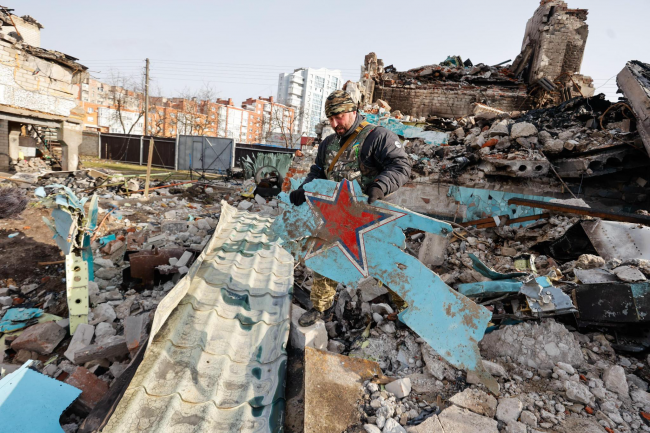
At the tactical level, Russian adaptation based on their backward starting position has been impressive by historical standards. The kill chain has been progressively compressed through the mass incorporation of drones, loitering munitions, and commercial communication technologies in response to Ukrainian tactics. The Lancet loitering munition, guided by accompanying ISR drones and striking targets at ranges of seventy kilometers, fuses the sensor and the effector into a single organic platform: a reconnaissance-strike system at the small-unit level. Integrated command centers fuse real-time ISR data from multiple sources. The adoption of Android-based targeting software and commercially acquired Starlink terminals has produced a distributed command architecture that bears little resemblance to the rigid, centralized system Russia brought to the field in February 2022.
At the ground-tactical level, the shift to storm-detachment methods represents genuine doctrinal flexibility, but here the parallel to Ludendorff must be drawn with full weight. Russia’s storm detachments face the identical structural problem: they take ground hundreds of meters at a time, at the cost of casualties on a scale that would have likely appalled even the commanders of 1916, but they cannot convert these local gains into historically similar operational maneuver because the transparent battlefield denies them the capacity to mass, exploit, and advance at the tempo the deep operation requires.
Where Russia has been more effective than Ludendorff is in the execution of the deep operation by bypass via strategic fires. Ludendorff could not reach the British and French industrial base from a distance. Russia can and does reach Ukraine’s, and vice versa.
A further distinction the Ukrainian revenue campaign forces into the analysis: the doctrine of attrition that underlies the deep operation by bypass treats destruction as continuous and accumulative. Each refinery destroyed adds to a running total, and the strategic effect is the integrated sum of physical damage over time. This treatment is sufficient when the value of the destroyed asset is constant but it is inadequate when the value of the destroyed asset is contingent on a window the operator cannot control or extend.
The Ukrainian campaign of spring 2026 against Russian oil infrastructure is the case in point. The Iran war has elevated Brent crude into the 110-to-120 dollar range for an extended period early in the war, and Russia’s revenue arithmetic at that price is qualitatively different from its arithmetic at the 60-to-70 dollar range that prevailed before the Hormuz disruption. Damage inflicted on Russian refining and export capacity at 115 dollars per barrel denies revenue at a rate roughly twice what the same damage denied at 60 dollars. The physical destruction is identical but the economic effect compounds against the price fluctuation.
This produces a tempo logic the classical deep operation does not theorize. The operator who reads the price curve correctly accelerates the campaign during the window and accepts diminished returns outside it. The operator who treats bypass as continuous attrition, indifferent to the price environment, leaves strategic value on the table. The April 2026 Ukrainian strike record on Russian oil infrastructure (21 strikes including the 4-strike sequence on Tuapse refinery) is best read as a planner reading a clock. A settlement that reopens the Strait of Hormuz collapses the price window and reduces the marginal value of further infrastructure strikes by half overnight, with the physical damage already inflicted remaining on the books.
This is closer to capital warfare than to industrial attrition. The relevant precedent is not the Soviet long campaigns of 1944 but the contested literature on shorting structurally mispriced assets during their dislocation. The trade is the timing as much as the destruction. The deep operation by bypass against revenue infrastructure inherits a category of operational logic that classical Soviet thought never had occasion to develop, because Soviet thought never confronted an enemy quite in the same way as one whose revenue base was simultaneously elevated and time-limited by a contingency in a separate theater.
Russia has also grasped, perhaps more by having it beaten into them than by theoretical clarity, that the classical combined-arms breakthrough is impracticable under current conditions, and has shifted its deep-operational effort upward. Whether this shift constitutes strategic success or merely the substitution of one form of attrition for another depends on the answer to a question that is fundamentally political rather than operational: which society can sustain the costs of this total societal war longer?
Ploiești and the Limits of Symmetry
The relevant historical anchor for the contemporary Ukrainian campaign against Russian oil and export infrastructure is the Anglo-American Combined Bomber Offensive of 1942 to 1945, and within that campaign, the specific subset that produced demonstrable strategic effect: the 1944 Oil Campaign against Ploiești and the German synthetic fuel infrastructure at Leuna and elsewhere.
The United States Strategic Bombing Survey conducted after the war drew sharp distinctions among the campaigns it evaluated. The area bombing of German cities, intended to break civilian morale, produced enormous destruction and casualties. The Survey concluded it had not broken morale, had not interrupted production sufficiently, and had not produced strategic effect proportionate to the cost. The targeted oil campaign against Ploiești, the synthetic fuel plants, and the German fuel-distribution network produced a different result. By autumn 1944, the Luftwaffe was operating with severely curtailed sortie rates because aviation gasoline production had collapsed. Panzer divisions were running out of fuel mid-operation. Training programs for new pilots were truncated for lack of fuel to fly training missions. The German army did not lose its will to resist, but it lost the metabolic substrate that converted will into action.
The Survey’s distinction maps onto the campaigns now in progress. Neither belligerent in Ukraine is conducting a pure form of either bypass mode, much the same as the Allied campaign itself, and therefore binary framing risks obscuring as much as it reveals.
Russia’s bypass against Ukraine has seemingly been weighted toward consumption infrastructure (the power grid, district heating, gas distribution to households), though it has also consistently included revenue and reconstitution targets. The Black Sea grain corridor has been attacked repeatedly, with strikes on Odesa port, the Izmail river facilities, and the Danube grain terminals that handle Ukrainian agricultural exports. Ukrainian defense-industrial sites have been hit since the opening days of the war, and delivered NATO weapons systems have been struck before they reached the front. Russia’s campaign is best read as a mixed bypass with its center of gravity to-date in consumption, likely also because it desires to retain undamaged revenue-producing instruments in captured territory.
Ukraine’s bypass is the inverse mixed campaign, with a primarily military target list but a growing center of gravity in revenue generation. Strikes on Russian military airfields and ammunition depots (reconstitution) have been a sustained component since 2022. Strikes on Russian electricity infrastructure have been episodic and limited. The recent systematic concentration on refining capacity, oil export terminals, pipeline pumping stations, and crude-loading ports reflects a doctrinal evolution that Ukraine could not have executed earlier in the war and might not be able to execute for long. Three core conditions produced it:
The first is the indigenization of Ukrainian long-range strike capability. The deep-strike systems carrying the spring 2026 campaign, including the FP-1, the Liutyi, the Bober, the Neptune cruise variant in its land-attack configuration, and the developing Sapsan ballistic system, are predominantly Ukrainian-produced. Western-supplied long-range systems came with constraints on targeting that were political as much as technical. ATACMS deliveries were rationed, and their employment against targets in Russia proper was subject to continuous political negotiation with the Biden administration. Storm Shadow and SCALP were similarly constrained. The shift to indigenous platforms freed Ukrainian targeting from external veto, as Ukraine no longer requires NATO permission to hit Russian refineries with non-NATO weapons.
The second condition is, ironically, the withdrawal of American oversight by an administration politically less aligned with Ukraine than its predecessor. The Biden administration’s calibrated support carried calibrated constraints: each escalation step, including the eventual permissions for deeper strikes in autumn 2024, emerged from an internal political process that prioritized escalation management. The Trump administration’s reduced engagement with Ukrainian targeting, combined with its reduction of intelligence-sharing in several categories and its general posture of detachment from theater details, has removed the explicit US hand from Ukrainian target lists without replacing it. Ukraine has not been required to seek American permission to hit Sverdlovsk or Chelyabinsk, especially not with domestically produced weapons. The Ukrainian planner of spring 2026 operates with a targeting envelope the materially better-supported Ukrainian planner of 2024 did not have. The reduction of American support has coincided with, and partly produced, the expansion of Ukrainian operational freedom against precisely the targets that matter most to Russian war finance.
The third condition is the wars as a doctrinal laboratory. Iran War strikes in 2025-2026 demonstrated a coordinated suppression-of-enemy-air-defense campaign followed by sustained strikes at scale against a hardened near-peer adversary. The Israeli intelligence operations inside Iran, including recruited agents employing kamikaze drones against pre-mapped targets, was seemingly a similar operational template that Ukraine’s Operation Spiderweb used against Russian strategic airbases. The 2026 phase of the conflict, with its escalating strikes against Iranian oil infrastructure and tit-for-tat strikes on Gulf oil infrastructure and the American blockade of Iranian ports from April 13, supplied further doctrinal evidence that sustained revenue-focused bypass at scale was operationally feasible and politically survivable.
A state can continue resistance through any quantity of suffering but it cannot will the existence of fuel that does not exist, or the existence of foreign exchange that has not been accumulated. The Russian refinery throughput of 4.69 million barrels per day in early May 2026, the lowest level since December 2009, is not a number Russia can will higher, but only can resume through physical repairs and defenses.
What the Ukrainian campaign requires to convert into strategic effect is the persistence of its enabling conditions long enough for the metabolic damage to compound past Russia’s capacity to absorb. The Iran war’s end-state determines the price window, and the political engagement of the next American administration determines targeting ceilings, with the pace of indigenous Ukrainian weapons production determining the strike volume.
The Biden administration’s Ukrainian targeting vetoes were the nuclear ceiling in its operational form: a nuclear patron rationing its client’s reach into the homeland of a nuclear adversary. This was the grammar of every Cold War proxy conflict. The patron armed the client, the client bled the rival, and the rival’s own territory and strategic assets remained a sanctuary, as Manchuria and the Soviet supply line had been in Korea. The one notable exception confirms the rule: the mujahideen raids into Soviet Central Asia between 1985 and 1987, encouraged by the CIA and run through Pakistan, reached no more than a few tens of kilometers across the Amu Darya and were wound down once Moscow threatened Pakistan directly. What the indigenization of deep strike has done is remove the patron’s hand from the ceiling. Ukraine strikes refineries deep in the Russian interior, and in Operation Spiderweb struck the bomber leg of the Russian nuclear triad on its own airfields, with weapons it builds itself, on its own authority, and reportedly without informing its allies in advance. Iran, a non-nuclear state, has struck the territory of one nuclear-armed state and the regional bases of another. The proxy war has migrated from the periphery, and the escalation ladder that Cold War theory assumed the nuclear powers would hold between them now has other hands on it: those of non-nuclear belligerents with existential stakes and no veto to respect.
Notably, Ploiești required twelve months of sustained pressure in 1944 to produce its strategic effect on the German war machine.
VII. Contests for Sight
If the transparent battlefield has produced the crisis of the combined-arms breakthrough, and if the deep operation by bypass also depends on the capacity to see the enemy’s depth and strike it with precision, then the paramount contest of the current era is the contest for sight itself: the struggle to impose transparency on the adversary while denying it to oneself. This contest is being waged across every available means, and it is essential to understand that electronic warfare is only one instrument within it. To describe the contest for sight as “drone warfare” or “electronic warfare” would be like describing the Great War as “a machine gun war.” The machine gun was the most visible instrument of the firepower-intensive front, but the front was produced by the interaction of machine guns, artillery, barbed wire, entrenchment, emerging war machinery and the industrial capacity to replace losses. Similarly, a contest for sight encompasses physical destruction of sensors, electronic suppression and jamming, cognitive bypass, domain exit through fiber optics, deception through decoys, and the leveraging or denial of commercial satellite constellations that no single state controls.
Consider the full spectrum of methods:
Physical destruction. In the opening hours of Operation Rising Lion, Israel destroyed Iranian early warning radar systems through strikes: not by jamming their signals but by blowing them up. This was not electronic warfare. It was the most ancient form of counter-reconnaissance: destroying the enemy’s eyes with direct fire. Russia has systematically targeted Ukrainian radar positions throughout the war. Both sides hunt each other’s reconnaissance drones with interceptor drones, anti-aircraft fire, and small arms. The most direct way to deny the adversary sight is to destroy the physical systems through which he sees.
Electronic suppression. Russia fielded satellite-navigation jammers such as the Pole-21, each antenna module of which denies GPS out to roughly twenty-five kilometers, and tiled them across defended sectors, while also proliferating short-range drone jammers down to the small-unit level. By 2024, Russian tactical-tier electronic warfare achieved interception rates of 85% to 90% against radio-frequency-linked drones. This is the domain traditionally understood as electronic warfare: the suppression or disruption of the adversary’s electromagnetic emissions.
Domain exit. The most consequential response to electronic warfare has not been better electronic warfare. It has been the abandonment of the electromagnetic spectrum altogether. Russia introduced fiber-optic-controlled drones in late 2024: platforms trailing hair-thin optical cables that are physically immune to any form of electromagnetic jamming. Both sides adopted them at scale by summer 2025, with some Ukrainian units reportedly moving away from radio links entirely. The fiber-optic drone does not contest the electromagnetic spectrum. This is a fundamentally different category of response than electronic counter-countermeasures, and it renders the entire paradigm of “electronic warfare” essentially moot for the platforms that employ it.
Cognitive bypass. When GPS jamming threatened navigation, Ukrainian developers introduced visual-navigation systems using neural networks trained on terrain imagery. The logical terminus, visible in prototypes fielded in 2025, is the fully autonomous strike platform that navigates, identifies, and engages targets without any external data link: neither radio, nor GPS, nor fiber optic. Such a system does not contest the adversary’s electronic warfare, similar to fiber optic cables, it makes electronic warfare irrelevant to its operation. The drone sees with its own eyes and thinks with its own processor. The only way to deny its sight is to destroy it physically or to somehow deceive its neural network which opens an entirely new domain of countermeasure.
Deception. Both sides in Ukraine have made extensive use of decoys: inflatable tanks, fake howitzers costing a \$1,000 each, heat and radar signature emitters designed to fool reconnaissance, and multispectral camouflage nets that conceal assets from radar and infrared sensors have been deployed. The contest for sight includes not only the capacity to see but the capacity to make the adversary see incorrectly: to pollute his surveillance with false information, waste his precision munitions on decoys, and erode his confidence in the targeting data his sensors provide. This dimension of the contest has ancient precedent and will only become more significant as AI-driven target recognition systems create new vulnerabilities to deception.
Satellite denial. The transparent battlefield rests substantially on commercial satellite constellations that no single belligerent controls. Ukrainian officials have publicly requested assistance in denying Russian access to commercial satellite coverage. The question of whether and how a belligerent might deny the adversary access to commercial satellite data is among the most consequential unresolved problems of the contest for sight. Anti-satellite weapons, cyber attacks on ground stations, diplomatic pressure on commercial providers, and physical attacks on downlink infrastructure are all potential vectors. The state that achieves even temporary satellite denial over a specific theater would create conditions for operational surprise that the transparent battlefield otherwise precludes.
Entanglement. One boundary of the contest for sight deserves separate notice. The sensors and platforms through which a nuclear power sees and strikes conventionally are in part the same ones through which it maintains its nuclear deterrent: strategic early-warning radars, airborne surveillance and command aircraft, dual-capable bombers, the satellites that serve both targeting and launch detection. The contest for sight and the deep operation by bypass therefore reach, as a matter of course, assets whose loss a nuclear state may read as preparation for a preemptive nuclear strike. In May 2024 Ukrainian drones struck Russian strategic early-warning radar sites at Armavir and Orsk, damaging at least one antenna and drawing a formal expression of concern from Washington. A year later Operation Spiderweb burned Tu-95MS and Tu-22M3 bombers and A-50 aircraft on their own airfields. Moscow’s restraint in each case establishes that the threshold sits higher than its declaratory policy suggests, and it does not establish exactly where the threshold is. The ceiling is not a line but a gradient of rising probability, and these operations erode it from below.
The critical implication for operational theory is that the transparent battlefield is not a permanent condition. It is the current condition: the product of a specific correlation between the means of surveillance and the means of counter-surveillance. If the contest for sight is a new center of gravity, then transparency is not a fixed feature of the environment but a contested variable. It can be imposed, degraded, and temporarily reversed through a combination of physical destruction, electronic suppression, domain exit, cognitive bypass, and deception.
This matters enormously. If transparency were permanent and irreversible, then the combined-arms breakthrough would be permanently impossible, and the deep operation could only ever be executed by bypass, but if transparency is contestable: if windows of reduced visibility can be created through the coordinated employment of counter-sight methods, then the possibility of operational surprise at the ground level has not been abolished. It has been made extraordinarily difficult and expensive, contingent on winning the preliminary contest for sight, and available only in narrow windows, but it has not been eliminated. The commander who can temporarily blind the adversary through a coordinated campaign of sensor destruction, electronic suppression, deception, and satellite denial may still be able to mass, move, and strike sufficiently before the adversary recovers vision.
The deep operation by breakthrough is not dead but dormant, awaiting the system and the conditions under which the contest for sight can be won decisively enough to permit its execution. Whether that condition will materialize to maturity in the current wars or the next war is an open question. That the contest for sight will determine whether it does is the central operational reality of the present era.
VIII. The Character of the Next War
Isserson did not merely diagnose the crisis of his era. He attempted to foresee the character of the next war and to derive operational principles adequate to fight it. We owe his legacy the same ambition, but we also owe him the intellectual honesty to identify where our analysis encounters genuine uncertainty and one such uncertainty demands confrontation before we proceed.
The Jeune École problem. In the 1880s, a school of French naval theorists — the Jeune École — argued that cheap torpedo boats would render expensive battleships obsolete. The torpedo had demonstrated that a small, fast vessel carrying a single weapon could sink an armored warship costing a hundred times more. The Jeune École drew the conclusion that appeared self-evident: mass-produce the cheap platform, overwhelm the expensive one, and save the enormous cost of a battle fleet. Under the influence of Admiral Théophile Aube, France halted battleship construction and redirected resources to torpedo boats and cruisers.
The Jeune École was right about the vulnerability as torpedo boats could and did threaten battleships, but it was catastrophically wrong about the strategic conclusion. A known limitation was that torpedo boats could not project power beyond coastal waters and they could not sustain operations on the open sea, which meant they could not protect commerce, impose blockades, or force decisive engagements. They could deny a harbor but could not control a sea lane. When France confronted Britain at Fashoda in 1898, the French navy — rebuilt around the Jeune École doctrine — was unable to project sufficient force to support French interests overseas. The Kaiser reportedly observed: “Poor France. She acknowledges herself beaten without a shot having been fired.” The cheap platform could threaten the expensive one in specific, bounded conditions but it could not perform the strategic functions that the expensive platform existed to perform.
The lesson was not that the torpedo boat was useless but it was that the relationship between cheap and expensive platforms depends on the strategic-operational goal of the operator. For coastal defense, the Jeune École was vindicated and its ideas eventually produced the submarine, which nearly strangled Britain’s sea trade in two world wars. For power projection, it was a disaster. The torpedo boat complemented the battleship but it did not replace it.
The real revolution in naval warfare via the use of the torpedo itself came from naval aviation utilizing them to great effect, launched from aircraft carriers against other ships and carriers. The Jeune École was vindicated nearly a half-century later, and essentially in a different domain entirely: the air rather than sea.
This analogy applies with full force to the contemporary argument that the \$500 drone has rendered the \$10-million-dollar tank obsolete and that expendable precision has replaced the exquisite platform as the decisive instrument of war. The argument may be correct or it may be a repetition of the Jeune École’s partial error, right about the vulnerability and wrong about the strategic conclusion. The answer depends entirely on what the operator is trying to achieve.
If the strategic-operational goal is the deep operation by bypass — the degradation of the adversary’s capacity to fight through long-range fires, infrastructure destruction, and the attrition of reserves without seizing territory — then expendable precision is indeed the dominant instrument, and the exquisite expensive platform is genuinely demoted. You do not need a main battle tank to strike a power plant a thousand kilometers away, you need a drone factory and a targeting network. For this form of warfare, the Jeune École is vindicated: the cheap, expendable, individually guided munition produced in the millions is the decisive weapon, and the arithmetic of industrial production capacity determines the outcome.
If the strategic-operational goal requires the seizure and control of territory and if the strategic objective demands that a specific piece of ground be taken and held, as Russia’s objective demands in the Donbas or even as it’s emerging in the Hormuz case, then the Jeune École problem reasserts itself with full force. Drones and missiles cannot hold ground yet, albeit the Ukrainians are trying. No amount of precision fire from a thousand kilometers can substitute for infantry who must advance across the observed fire zone and physically occupy the position. Infantry who must advance across a fire-swept zone still require protection, which is what armored vehicles exist to provide.
The tank is not dead, it is being used differently under such conditions. Both sides in Ukraine continue to employ armored vehicles, just not in the massed concentrations of the combined-arms breakthrough, but dispersed, as direct-fire support platforms for small infantry assault groups, providing suppressive fire from concealed positions. The form has changed but the function has not. The infantry assault still requires something that can absorb fire and deliver suppressive effects, and no expendable drone performs that function. The tank’s role has been reduced from the decisive breakthrough instrument of 1943 to the close-support weapon of 1918/2025, which is a significant demotion but not an abolition. Those who declare its death are making the Jeune École error: observing that the cheap weapon can destroy the expensive one and concluding that the expensive one is therefore unnecessary, without asking what operational function it performs that the cheap weapon cannot.
Again, the character of the next wars depends on their political objectives: a conclusion Isserson would have reached immediately, since he insisted that operational art cannot be separated from the political character of war.
The industrialization of expendable precision remains, under either scenario, the most consequential development for the character of the next war. Ukraine produced approximately 2.2 million drones in 2024, with projections exceeding 4.5 million in 2025. The arithmetic of war is increasingly determined by the capacity to produce and replace expendable munitions at industrial scale, and this arithmetic so far favors the attacker at the strategic level: when the cost of the attacking munition is a fraction of the cost of the interceptor, sustained production depletes the defender’s stockpiles faster than they can be replenished. Isserson’s multi-headed dragon metaphor of the First World War inverts: the attacker’s endlessly regenerated munitions are the regrowing heads, and the defender’s interceptors are the finite resource. Recent developments of low cost interceptor munitions and counter-drone fires is beginning to challenge this assumption.
But — and this is the Jeune École qualification — this arithmetic applies at the strategic level of the deep operation by bypass. At the tactical level, where infantry must still cross fire-swept ground, the economics may also be different. The \$500 drone destroys the advancing squad, but the defending infantry must also be protected from the attacker’s\$500 drones. The question is not whether cheap weapons destroy expensive platforms in isolation, but what correlation of forces — cheap and expensive, expendable and survivable, mass-produced and exquisite — produces the capacity to achieve the strategic-operational objective. The answer will not be the same for every belligerent, every objective, or every war.
Autonomy and the tempo of decision. The trajectory of drone development points toward increasing autonomy. Electronic warfare forced the shift from radio control to fiber-optic guidance; GPS jamming forced the development of visual-navigation neural networks; the logical terminus is the fully autonomous strike platform. The military significance of autonomy is primarily temporal: autonomous systems operate at machine speed, unconstrained by the latency of human decision-making. Autonomy also opens new vulnerabilities to deception, to adversarial manipulation of AI systems, to failures of target discrimination that produce strategic consequences. The autonomous drone that misidentifies a civilian target at machine speed produces a politicizable war crime at machine speed. The art of autonomy will require not merely the design of autonomous systems but the design of constraints.
The total character. The wars of 2022–2026 demonstrate a continuing progressive totalization of conflict that we can observe over history into the Second World War itself. Russia’s destruction of Ukraine’s energy grid, Ukraine’s strikes against Russian oil refining, US/Israel’s attacks on Iranian civilian infrastructure and Iran’s counter-attacks on Gulf and Israeli civilian infrastructure: in each case, the distinction between military and civilian targets has eroded toward disappearance. The next major war between peer states will tend toward totality regardless of its planners’ intentions, because the logic of the deep operation by bypass makes every element of the adversary’s society a potential target as a part of reconstitution of resistance and political will, and every element of one’s own society a potential vulnerability for the same. Isserson understood this: wars between incompatible systems, between belligerents whose political objectives leave no room for compromise, tend toward totality as a structural matter, not as a choice. The technology of expendable precision merely accelerates the tendency and lowers the threshold at which it manifests. Isserson wrote before the nuclear weapon, however, and the objection must be met directly: the Cold War was the purest contest of incompatible systems history has produced, and it did not become total war.
Ceilings on war. The nuclear revolution is usually understood to have imposed a “ceiling” on war between great powers, and the Cold War is offered as its proof: forty years of systemic antagonism confined to proxy wars on the periphery, with the homelands and strategic assets of the principals held as mutual sanctuary. Korea, as we saw in Section IV, was the first war fought under such conditions and the ceiling is still operative. But the wars of 2022–2026 show that it is a ceiling on a mechanism, not on aims. The mechanism it foreclosed is overthrow of peer adversaries by invasion and occupation a la Berlin 1945. It was assumed to foreclose totalizing aims along with it. The aim of the destruction of a nuclear-armed adversary as a functioning state has not disappeared, it has migrated to the one mechanism left open, the induced failure of social reproduction described in Section V, and the deep operation by bypass is the instrument of that mechanism. The ceiling does not suppress the bypass but precisely selects for it.
The thesis can therefore be stated precisely: The next major war between nuclear powers will tend toward totality in breadth and in aim while remaining bounded in mechanism: no march on the capital, and every refinery, substation, port, and payment channel a front. It will be fought as the present wars are fought, through and alongside non-nuclear belligerents who strike the core of nuclear states directly: the Cold War proxy conflict moved from the periphery into the homeland. And its decision, if it comes, will come as it came to Petrograd in 1917 and Berlin in 1918, from within.
This is a more dangerous condition than the one it replaces, and the reason should be stated without euphemism. A bypass campaign against a nuclear power is tolerated in inverse proportion to its success. Russia’s 2024 declaratory doctrine lowered the stated threshold for nuclear use from a threat to “the existence of the state to a conventional attack posing a “critical threat” to sovereignty and territorial integrity,” and it treats aggression by a non-nuclear state supported by a nuclear one as a joint attack. It is a text written for exactly the war described here. The point at which the bypass approaches strategic effect is the point at which the targeted regime has the greatest incentive to gamble and the least assured control over its own arsenal. The only precedent for the dissolution of a nuclear state, the Soviet collapse of 1991, occurred in peacetime, by internal decision, with an intact chain of command and an adversary anxious to help secure the warheads. A wartime collapse induced from outside would enjoy none of these conditions. The German precedent cannot tell us what a Hohenzollern-state in possession of a strategic arsenal would have done in October 1918. Operational theory can identify this as the central unresolved risk of the method but cannot resolve it.
Conclusion
If Isserson were to examine the wars of 2022–2026, he would not mourn the obsolescence of the combined-arms armored breakthrough. He would recognize its supersession: partial, conditional, dependent on the political/strategic objectives of the war, as the natural consequence of changed conditions.
He would insist, as he always insisted, that the response must be theoretical: not a collection of tactical adaptations but a coherent reconceptualization of the relationship between strategy, operations, and tactics under the new conditions. He would warn against the two characteristic errors of military thought in transitional periods. The first is conservatism: the insistence that the old forms remain valid because they worked in the last war. The Western military establishments, invested in decades of doctrine built around the exquisite platform and the combined-arms team, have shown themselves acutely vulnerable to this error. The second is futurism: the breathless embrace of new technology without a theoretical framework to integrate it into operational practice, the announcement that everything has changed based on a single weapon system’s battlefield debut. The Jeune École fell into this trap. The drone maximalists may be falling into it now.
The correct approach — Isserson’s approach — is historical-theoretical. It proceeds through a critical analysis of recent combat experience, stripped of partisan enthusiasm and institutional defensiveness. It interrogates its own conclusions: asking always whether the observed vulnerability of the expensive platform to the cheap weapon translates into the strategic obsolescence of the functions that platform performs, and it concludes with the derivation of operational principles that are adequate to the new conditions while remaining honest about what remains uncertain.
As he wrote in 1936: it would be absurd to teach operational art as a kind of ready-made scheme or recipe. The very essence of operational art presupposes freedom of methods and forms which should be carefully chosen each time to fit a concrete situation.
The concrete situation has changed and methods and forms must change with it. The only constant is the method of analysis itself: the relentless derivation of operational theory from the material conditions of the present, without sentiment, without prejudice, and without the deference to inherited doctrine that Isserson identified as the fundamental intellectual disability of the military profession.