The Left’s New Opening
April 12, 2026
Rudolf Prikryl
Written in February 2026 prior to the Iran War.
How Neoliberal Triumph Recreated the Conditions It Was Designed to Prevent
A Thinkpiece on Global Class Dynamics in the 2020s
I. The Triumphalist Gambit
The fall of the Soviet Union in 1991 was supposed to settle the question forever. Francis Fukuyama declared the end of history; Margaret Thatcher insisted there was no alternative. Global capitalism had won. The experiment was over.
But what followed wasn’t merely triumphalism. It was a calculated strategic maneuver—an attempt to reorganize global class relations in a way that would make revolutionary upheaval permanently impossible. The neoliberal project that accelerated after 1991 wasn’t just about maximizing profits or shrinking the state. It was about solving a problem that had haunted capital since 1848: how do you prevent the emergence of weak links: those volatile conjunctures where revolutionary movements could actually seize power?
Lenin’s theory of the weak link explained why socialist revolutions occurred in Russia and China rather than in the advanced capitalist countries Marx had predicted. The chain of global capitalism broke not at its strongest points (Germany, France, Britain, America, et al.) but at its weakest: the semi-peripheral nations caught between feudal remnants and capitalist development, where contradictions were sharpest and the ruling class least stable. Meanwhile, the imperial core remained quiescent. Workers in the metropole were bought off through what Lenin called the labor aristocracy, or the bribe extracted from super-profits of colonial and neo-colonial exploitation, whether internal or abroad.
II. The Post-War Settlement as Counter-Revolutionary Project
The post-WWII social democratic settlement was not, as it’s often remembered, merely a progressive achievement wrung from enlightened capitalists. It was a counter-revolutionary mechanism designed to maintain the loyalty of core workers against the actually existing socialist alternative. Social security, Medicare, strong unions, rising wages, the GI Bill, and subsidized homeownership were the material content of the bribe. As long as a significant loyalist element of American and European workers had more to lose than their chains, they would defend the system.
This arrangement held, despite the upheavals of the 1960s and 1970s, but understanding how it held is essential for understanding the left’s subsequent trajectory. The instability of that era—Vietnam, civil rights, the Black Power movement, wildcat strikes, urban uprisings—was serious. It was also racialized in ways that shaped its resolution and the left’s deformation.
The labor aristocracy was at first not a universal bribe to the entirety of the American working class. As has been expounded elsewhere, it was primarily a white working class bribe. The New Deal that established the post-war settlement was explicitly constructed to exclude non-white workers: domestic and agricultural labor exempted from Social Security and labor protections, FHA redlining ensuring suburban homeownership remained white, unions that organized on Jim Crow lines. The ‘American Dream’ of homeownership, rising wages, and secure retirement was offered to white workers as compensation for accepting capitalism; non-white workers were offered nothing but continued super-exploitation within the imperial core itself in various internal colonies.
The upheaval of the 1960s and 1970s was therefore not simply ‘labor unrest’ but a challenge to this racial compact from those it excluded. The civil rights movement, Black Power, the urban uprisings from Watts to Newark to Detroit were responses to the specifically racialized character of American capitalism. And crucially, the most radical elements of this struggle understood the connection between racial oppression and capitalist exploitation. The Black Panthers weren’t fighting for inclusion in the white labor aristocracy; they were fighting for socialism. Martin Luther King’s turn toward the Poor People’s Campaign, his opposition to Vietnam, his explicit identification of capitalism as the enemy was a universalist class politics emerging from the particular experience of the material immiseration of racial exclusion. Fred Hampton’s Rainbow Coalition was building precisely the multiracial working-class solidarity that could have threatened the entire arrangement.
The resolution of this crisis established the template for everything that followed. The socialist and revolutionary elements were crushed: COINTELPRO, assassination, imprisonment, infiltration. Hampton was murdered in his bed by the FBI and Chicago police. The Panthers were systematically destroyed. The revolutionary potential of the Black freedom movement was decapitated.
Meanwhile, the liberal elements were accommodated, partially, selectively, in ways that defused the threat. Formal legal equality, voting rights enforcement, affirmative action that integrated a thin stratum of non-white petty bourgeoisie into elite institutions. The bargain was: we’ll let some of you into the labor aristocracy (creating a non-white stratum with union jobs, pensions, something to lose), we’ll cultivate a non-white petty bourgeoisie (professionals, small business owners, diversifying the face of institutional power), but the fundamental structure of racial capitalism remains untouched. The price of admission was abandoning revolutionary politics.
This resolution established the prototype for what would become ‘culture war’ politics and the left’s subsequent capture by it. The revolutionary demand (end capitalism) was translated into the liberal demand: diversify capitalism. The struggle for power became the struggle for representation. And the white working class, offered a choice between multiracial class solidarity and racial resentment, was encouraged by every institution to choose resentment. Nixon’s Southern Strategy, Reagan’s welfare queens, the entire architecture of racial coding in American politics was the ruling class solution to the 1960s. If you can’t maintain the white labor aristocracy materially forever, maintain it ideologically: convince white workers their enemy is non-white workers, DEI, immigrants, and not capital.
The hippie counterculture and the New Left more broadly played their own role in this defeat and their failure had a distinct class character that’s rarely acknowledged. The counterculture was overwhelmingly a phenomenon of the children of the petty bourgeoisie and the labor aristocracy: suburban, college-educated, with enough family wealth to ‘drop out’ without consequences. Their radicalism was individualist, spiritual, lifestyle-based consciousness expansion rather than organization building, personal liberation rather than collective power, ‘be the change’ rather than seize the state.
This wasn’t accidental. Working-class youth didn’t have the luxury of dropping out; they were working to survive, being drafted and sent to die in Vietnam, etc. The class position of the counterculture determined its politics: if you’re not facing material immiseration, if your rebellion is against the ‘conformity’ of suburban comfort rather than against exploitation, then your radicalism will be about authenticity, expression, and lifestyle rather than wages, power, and ownership. The famous tension between hippies and hardhats wasn’t false consciousness on the part of workers but it was a recognition that these longhaired kids weren’t always fighting the same fight.
The New Left’s theoretical turn reinforced this trajectory. The abandonment of the working class as revolutionary subject (supposedly too bought off, too racist, too consumerist, or simply non-industrial now and therefore not a proletariat somehow) in favor of students, minorities, and Third World national liberation movements reflected the class composition of the movement itself. If you’re a graduate student, you theorize students as the revolutionary vanguard. The turn toward cultural politics, toward ‘personal is political’, toward fighting on terrain where the petty bourgeoisie has advantages—credentials, cultural capital, institutional access—this all followed naturally from who was usually theorizing.
The defeat of the 1960s-70s upheaval thus produced a double deformation of the American left. The revolutionary movement was destroyed, and its liberal remnant was integrated into the petty bourgeoisie as the face of ‘diversity’. The white New Left retreated into academia and lifestyle politics, abandoning the material terrain where class struggle actually occurs. The ground was prepared for the neoliberal turn: a left that fights over representation rather than redistribution, that moralizes rather than organizes, that speaks the language of identity rather than class not because identity doesn’t matter, but because identity without class politics is compatible with capitalism in a way that class politics never can be.
Meanwhile, the periphery remained volatile. Revolutionary movements in Cuba, Vietnam, Angola, Mozambique, and Nicaragua demonstrated that the weak links hadn’t been welded shut. The Soviet Union, whatever its internal contradictions, provided material support and an ideological alternative. Capital’s global problem wasn’t solved but it was managed through a combination of metropolitan bribes and peripheral counterinsurgency.
III. The Neoliberal Solution
Then came the collapse of 1991. With the Soviet alternative gone, capital saw its opportunity. The neoliberal turn that had begun in the 1970s could now be completed. But what was the strategic logic of this turn?
The conventional narrative focuses on deregulation, privatization, and austerity as profit-maximizing moves. This is true but incomplete. The deeper logic was about global class stabilization through convergence. The neoliberal project aimed to solve the weak link problem once and for all by evening out the global distribution of exploitation.
The mechanism was outsourcing and financialization. Manufacturing moved from the core to the periphery—first to the Asian tigers, then to China, then globally. This served multiple functions. It raised living standards in the periphery (reducing revolutionary potential there) while lowering wages in the core (eliminating the labor aristocracy’s material basis). The extreme gap between First and Third World workers would narrow, creating a more homogeneous global proletariat—but one that was everywhere too precarious to revolt.
The core would remain loyal, the theory went, not because workers were well-bribed but because they were adequately terrified. The stick replaced the carrot. If your factory moves to Mexico when you organize, you don’t organize. If your job can be automated or outsourced, you take what you’re given. The social safety net could be dismantled because it was no longer needed to purchase loyalty, precarity itself would discipline the working class. Capitalist crises such as the 2008 financial crisis or the Russia-Ukraine war provide the justification for belt-tightening.
Meanwhile, the periphery would be stabilized through development. Rising wages and an expanding petty bourgeoisie would integrate formerly revolutionary populations into global consumer capitalism. The Chinese peasant who might have joined Mao would now buy an iPhone. The weak links would be welded shut not by repression but by prosperity.
IV. The Marcyite Framework: Strengths and Limits
To understand both the neoliberal strategy and its unraveling, we need to engage seriously with the theoretical framework developed by Sam Marcy and the Workers World Party tradition—what might be called the global class war analysis. This framework has been dismissed as ‘campism’ or ‘tankie’ politics, but it offers some key insights that more “respectable” left traditions have missed.
Marcy’s core insight was theorizing global class forces: imperialist powers versus colonized and socialist nations. He saw national liberation movements as objectively anti-imperialist regardless of their specific ideology. This led to what critics call ‘campism’: support for any state opposing American hegemony, from the Soviet Union to Ba’athist Iraq to contemporary Russia and China.
The strengths of this framework are considerable. First, it correctly identified the principal contradiction in the immediate post-WWII period: the conflict between imperial metropole, socialist periphery and non-socialist periphery was more determinative than internal class struggles within the core. American workers weren’t going to make revolution while they were materially invested in empire. Second, it predicted that peripheral resistance would eventually undermine the labor aristocracy’s bribe: that the “super-profits” funding core quiescence depended on continued peripheral submission. Third, it understood that ideological purity was a luxury: building the broadest possible anti-imperial coalition meant accepting allies whose internal politics were far from socialist. You don’t demand everyone be communist; you demand they resist Washington.
The Marcyite position that seemed especially bizarre in 1985 before the collapse of the Soviet Union, or 2001 during the invasion of Afghanistan looks increasingly prescient today. The prediction that core workers would radicalize as imperial tribute dried up, that peripheral resistance would create objective conditions for metropolitan instability, that the Soviet Union’s collapse would prove pyrrhic for capital; all of this is playing out before our eyes.
But the framework has serious limitations that become more apparent precisely as its predictions come true. The first is what we might call the objectively progressive problem. Marcy argued that any force weakening American hegemony was objectively progressive regardless of its internal character. This made sense when the choice was between imperialism and some form of resistance, but it provides no guidance for distinguishing between different types of resistance, or for what happens when reactionary anti-imperialism succeeds.
When Putin’s Russia weakens NATO, is that progressive? In the narrow sense of reducing American hegemonic capacity, yes. But Russian victory doesn’t create conditions for socialist revolution in Russia, it strengthens an oligarchic nationalist regime. The Marcyite framework can acknowledge this but has no resources for thinking about it. Everything becomes instrumental to the primary task of weakening empire; what replaces empire can become secondary. This is classic revolutionary defeatism in the American context, though.
The second limitation is the missing theory of internal contradiction. By emphasizing the metropole-periphery divide as the principal contradiction, Marcyism tends to underestimate class contradictions within anti-imperial states. Chinese workers exploited by Chinese capital, Russian workers immiserated by Russian oligarchs, Iranian workers crushed by the Islamic Republic become secondary concerns, always potentially instrumentalized by empire and therefore suspect. This isn’t entirely wrong: Western ‘human rights’ concern for workers in enemy states is often cynical. But it leaves the framework unable to support genuine workers’ struggles that happen to occur in anti-imperial states and build international solidarity.
The third limitation is temporal. The Marcyite analysis was developed for a specific historical period: unipolar American hegemony, or bipolar Cold War competition before that. The principal contradiction was metropole vs. periphery because the metropole was overwhelmingly dominant. But what happens when hegemony cracks? When the periphery successfully resists? When the world becomes genuinely multipolar? The framework was designed for a defensive posture (resist empire, break the labor aristocratic arrangement, build resistance in the imperial core that does that regardless of ideological bona fides), not for the offensive question of what comes next.
V. Vulgar Anti-Imperialism: From Necessity to Liability
This brings us to the question of vulgar anti-imperialism, or the position that any force opposing American hegemony deserves support regardless of its character. This position was arguably correct for the period from roughly 1991 to the mid-2010s, and understanding why helps explain why it’s becoming a liability now.
Consider the world of 2011. American hegemony was still overwhelming despite the Iraq debacle. NATO had just destroyed Libya, turning Africa’s most developed nation into a failed state with open slave markets. The Arab Spring was being co-opted or crushed with American backing. Syria was under siege. The BRICS were nascent and tentative. China was still ‘peacefully rising’ while heavily integrated into global capitalism without directly challenging American primacy. Russia was recovering from the Yeltsin catastrophe but hadn’t yet proven it could resist Western pressure.
In this context, the principal contradiction was between imperial metropole and periphery. American power was so dominant that resisting it was the primary task. Questions about the internal character of resistance movements were secondary, not because they didn’t matter, but because the immediate enemy was so overwhelming that any resistance weakened it. When you’re drowning, you don’t critique the ideology of whoever throws you a rope.
The vulgar anti-imperialist position made a practical argument: in conditions of extreme power asymmetry, demanding ideological purity from resistance movements serves empire. Every leftist who refused to support Libya and even backed NATO overthrow because Gaddafi wasn’t socialist, every progressive who condemned Assad without acknowledging the alternative was Arab-Islamic religious nationalism backed by NATO crushing Kurds — these positions, whatever their moral merits, functionally aligned with imperial intervention. The perfect became the enemy of the possible.
But the world has changed. The vulgar anti-imperialist framework was designed for a unipolar moment that is ending. American hegemony is genuinely cracking not just ideologically but materially. China controls critical supply chains. Russia proved that Western economic warfare could be survived. The Global South is hedging and diversifying. Dedollarization is accelerating. The ‘rules-based international order’ is revealed as naked imperial preference.
In this new context, vulgar anti-imperialism becomes insufficient and potentially dangerous. When resistance to American hegemony is succeeding, the question of what replaces it becomes urgent. It matters enormously even to the domestic American left whether the emerging multipolar order is shaped by Chinese state capitalism, Russian oligarchic nationalism, Gulf petro-monarchy, Hindu supremacism, or genuine socialist alternatives, and how our domestic left interacts with these movements and is seen by the domestic working class. These are not equivalent simply because they all oppose Washington.
The shift can be understood dialectically. In the unipolar moment, anti-imperialism was the principal contradiction because hegemony was the principal obstacle to any alternative. As hegemony weakens, internal contradictions within the imperial core AND anti-imperial bloc become more salient. The united front against empire was appropriate when empire was overwhelming; as empire recedes, questions of program, class, and direction can no longer be deferred.
This doesn’t mean abandoning anti-imperialism or revolutionary defeatism as American hegemony remains the most destructive force on the planet, and its desperate attempts to maintain dominance will likely produce more catastrophic interventions. But it means that anti-imperialism alone is no longer sufficient as a political framework. The question ‘which side are you on?’ must be supplemented by the questions ‘helping which class’ and ‘what are you fighting to create?’
VI. The Core Becomes the Weak Link
Meanwhile, the reversal that neoliberal strategy was designed to prevent is occurring. The core is becoming a weak link.
The labor aristocracy’s bribe has been withdrawn, but the expected quiescence hasn’t materialized. Instead, the American and European working classes are increasingly exhibiting the characteristics of peripheral populations: declining living standards, collapsing life expectancy, deaths of despair, precarious employment, housing insecurity, medical bankruptcy, increasing government tyranny and, crucially, declining faith in institutional legitimacy.
The mechanism is precisely what the Marcyite framework predicted: peripheral resistance dried up the super-profits that funded the bribe. China industrialized for itself, not just as America’s workshop. Wages rose. They kept the value-added. They started competing instead of feeding. BRICS dedollarization means the US can’t just print money and export inflation to the rest of the world. Russia didn’t collapse after sanctions proving the ‘economic nuclear option’ was a dud. Yemen—Yemen—blockaded Red Sea shipping and the empire couldn’t stop them.
So the American worker experiences: wages stagnant since the 1970s, cheap goods getting less cheap, housing impossible, healthcare bankrupting, the dream visibly receding. And the response from capital is: there’s no more bribe to give. The surplus isn’t there. So instead of buying off the working class, you get austerity, immiseration, and increasingly naked class warfare from above.
The American working class doesn’t radicalize because they read theory. They radicalize because the material deal stops working. And the deal stops working because the periphery stopped subsidizing it.
VII. Conditions Everywhere, Organization Nowhere
Here is the bitter paradox of the present moment: the material conditions for revolutionary transformation exist globally to a degree not seen since the early twentieth century, but the organizational and ideological capacity of the left to act on these conditions is catastrophically weak.
The objective conditions are undeniable. Inequality has returned to Gilded Age levels. Climate catastrophe is no longer a future threat but a present reality. The legitimacy of existing institutions has collapsed. Young people face a future of precarity, debt, algorithmic tyranny and environmental degradation. The ideological hegemony of There Is No Alternative (TINA) has cracked; polls show majorities of young Americans view socialism favorably. The bribe is exhausted; the stick alone cannot maintain consent indefinitely.
Yet where is the left? The actually existing socialist states—Cuba, Vietnam, Venezuela—barely survive or integrate to global capital but they’re not positioned as hinge actors in the global transformation. China’s role as a potential new hegemon or bi-polar balance remains ambiguous. And the Western left faces a problem more fundamental than weakness: its dominant tendency is structurally incapable of meeting the moment.
Consider DSA, the largest socialist organization in the US in generations. There’s a progressive upsurge, with figures like Zohran Mamdani winning elections and building real bases. But this success reveals the problem rather than solving it. DSA’s orientation is toward social democratic governance: elect progressives, push the Democrats left, win reforms within the system. The theory is that accumulated reforms eventually produce socialism, or at least build working-class power sufficient to demand more.
This is the Kautsky problem, openly and gleefully repeated a century later with apparent awareness of how it ended the first time but a promise that this time will be different somehow.
Karl Kautsky was the ‘Pope of Marxism,’ the leading theorist of the Second International, who argued that socialism could be achieved through gradual parliamentary reform. Build the party, win elections, accumulate reforms, eventually—peacefully, democratically—transition to socialism. It was a compelling vision, and German Social Democracy built the largest, most sophisticated working-class movement in history pursuing it. By 1912, the SPD had over a million members, the largest vote share in the Reichstag, a vast network of unions, cooperatives, newspapers, and cultural organizations. If reformism could work anywhere, it would work in Germany.
Then came August 1914, and the SPD voted for war credits. The party that had organized against militarism for decades, that had pledged international working-class solidarity, that had threatened general strikes against war – when the moment came, they chose nation over class. Why? Because the institutional position they’d built required it. To oppose the war meant repression, illegality, the destruction of everything they’d constructed. The reformist path had built an organization that couldn’t afford to be revolutionary, whose very success made it conservative.
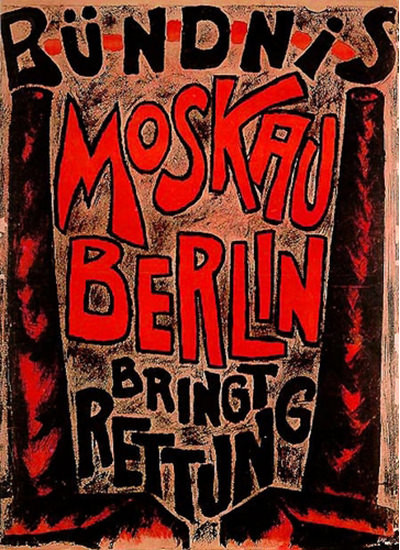
It got worse. When revolution came anyway in 1918, when German workers actually seized power in councils across the country, the SPD sided with capital against revolution. They called in the Freikorps, the proto-fascist paramilitaries, to crush the Spartacist uprising. Rosa Luxemburg and Karl Liebknecht were murdered by soldiers operating under SPD authority. The party of the working class drowned the working-class revolution in blood to preserve the institutional position that reformism had built.
The logic is structural, not personal. Reformism builds organizations whose existence depends on the continuation of the system being reformed. Every elected official, every union contract, every nonprofit grant, every foundation salary create interests bound up with systemic continuity. When crisis comes and the choice is revolution or preservation, reformist organizations MUST split and choose revolution or preservation as happened with the USPD and KPD. They cannot survive united when tested in this way.
Look at the contemporary left and ask: where would they stand in August 1914? The DSA elected officials who must caucus with Democrats to pass anything, who face primary challenges if they’re too radical, whose careers depend on remaining viable within the system, would they vote for war credits? Haven’t they already wih votes to fund Israel’s Iron Dome during Gaza genocide? The union leadership whose contracts and pensions depend on functioning capitalism, whose positions depend on labor law that a revolutionary rupture would suspend, would they call in the Freikorps? The nonprofit professionals whose salaries come from foundations that would defund them instantly for supporting actual revolution: which side would they be on?
The answer is obvious in the majority of cases, and it’s not a moral failing. These are structural positions that produce structural imperatives. The Kautskyites dominating DSA, the labor movement, the progressive nonprofit ecosystem are not consciously planning to betray the revolution and will demand the opposite, but are building organizations structurally incapable of making revolution in a unified manner, and when the moment comes, they’ll break according to their structural position. A majority will counsel patience, warn against adventurism, explain why this isn’t the right moment, defend the institutions they’ve built against the masses who threaten them. The logic that led the SPD to 1914 and 1919 is operating now, in organizations that have in fact learned nothing from that history.
This is the ultimate failure of reformism, repeated endlessly: it builds the means of its own betrayal. The stronger reformist organizations become, the more they have to lose, the more conservative they become, the more certain their eventual defection to the forces of order. The Second International was the mightiest working-class movement ever assembled, and it collapsed into social patriotism the moment it was tested. Why would DSA, with a tiny fraction of that power, act differently? In this sense organization and strength and size is actually counter to the needs of the proletarian class in power, while we must also be careful not to inflate the egos of micro-sectarians too much.
Compare this to the 1890-1914 period. Then, the Second International coordinated mass socialist parties with millions of members. German Social Democracy was the largest party in the Reichstag. The labor movement had built parallel socialist institutions such as unions, cooperatives, newspapers, cultural organizations that constituted a genuine counter-hegemony. When crisis came, there were organizations capable of contending for power. And they failed not despite their strength but because of it. The reformist path had made them structurally incapable of revolution precisely when revolution was necessary, leading to mass defection.
This is the organizational crisis of the contemporary left. It’s not simply that the left is weak but it’s that the left that exists is the wrong kind of left. Reformist organizations that will defect when tested. Activist networks that can mobilize for protests, one day strikes, etc. but not sustain campaigns. Academic leftists producing theory no one reads (guilty as charged?). Online communities that mistake posting for organizing. What’s missing is precisely what the Bolsheviks had and the SPD lacked: organizations that exist to make revolution, whose structural position doesn’t depend on systemic continuity, whose cadre understand that their organization must be willing to be destroyed rather than defect.
The right, meanwhile, invested in a different kind of organization. Think tanks, media empires, political networks, cultural institutions. While the left was processing its defeat, the right was building. They understood that ideological hegemony requires material infrastructure. They created that infrastructure. Fox News, the Federalist Society, mega-churches, talk radio, and now the entire apparatus of online radicalization weren’t spontaneous developments but strategic investments. And crucially, the right built organizations capable of rupture. The MAGA movement doesn’t need the Republican Party to survive; it can burn institutions down because its power doesn’t depend on those institutions.
The result is a profound asymmetry. When crisis arrives the right has organizations capable of acting outside systemic constraints. The left has organizations that will defend systemic constraints to preserve themselves. This is why, despite conditions favoring radical transformation, the actually existing radicalization is predominantly rightward. It’s not that the right has better ideas; it’s that the right has organizations structurally capable of wielding power in crisis, while the left has organizations structurally committed to preventing crisis from becoming revolution.
VIII. Hindenburg and Hitler: A Necessary Distinction
This brings us to a crucial distinction often collapsed in contemporary analysis: the difference between conservative authoritarian reaction and fascism proper. Understanding this distinction is essential for grasping both the current danger and the current opportunity.
Paul von Hindenburg represents one response to systemic crisis: the traditional conservative who, faced with institutional breakdown and popular unrest, turns to authoritarian measures to preserve the existing order. Hindenburg wasn’t a fascist. He was a Prussian monarchist, a representative of the old aristocratic-military elite, a defender of property and hierarchy. His resort to emergency powers, his toleration of paramilitary violence, his ultimate appointment of Hitler—these weren’t expressions of fascist ideology but of conservative desperation.
Hitler represents something categorically different. Fascism isn’t just authoritarianism or reaction; it’s a mass movement with revolutionary (counter-revolutionary) energy, a genuine popular mobilization that destroys the old order even as it claims to restore it. Fascism was specifically a response to the socialist threat—it emerged in Italy after the Biennio Rosso, in Germany after the failed revolutions of 1918-1923. It offered workers and the petty bourgeoisie an alternative radicalism: revolutionary energy directed not against capital but against designated enemies (Jews, communists, decadent elites). Fascism channeled the desire for transformation into destruction.
The distinction matters because fascism requires a socialist threat to respond to. The reason German capital backed Hitler wasn’t just that he promised order; it was that they faced an actual revolutionary movement. The KPD had millions of members. The SPD had governed. Soviets had briefly held power in Bavaria. Fascism was the bourgeoisie’s desperate gamble: better to unleash this monster than risk workers’ revolution.
What do we face today? The contemporary landscape is crowded with Hindenburgs. Trump, for all his authoritarian impulses, is more Hindenburg than Hitler—a vessel for oligarchic interests, a chaos agent captured by capital, not a genuine fascist ideologue building a mass movement with revolutionary discipline. The tech oligarchs—Musk, Thiel, their network—are closer to the industrialists who funded Hitler than to Hitler himself: they want authoritarian solutions to protect their wealth from democratic accountability. Modi, Orbán, Erdogan, Netanyahu, Milei—these are various flavors of authoritarian reaction, some with fascist elements, none yet representing fascism in its full historical form.
The space of Hitler in the present day remains open but unfilled. This is simultaneously reassuring and terrifying. Reassuring because fascism proper hasn’t consolidated; the right remains divided between oligarchic libertarians, religious nationalists, and various authoritarian populists without a unified movement capable of the disciplined mass mobilization that characterized historical fascism. Terrifying because the conditions that produce fascism are intensifying, and the absence of a strong left means the field is open.
Here’s the dialectical irony: the weakness of the left, which seems like an unqualified disaster, also prevents the emergence of fascism proper. If there were a mass socialist movement threatening capital—as there was in 1919-1933—the bourgeoisie would fund and unleash fascism as they did then. The absence of such a threat means that capital can, for now, manage through conventional authoritarian means: capture the courts, suppress the vote, buy the media, discipline labor through precarity. Hindenburg solutions suffice when there’s no revolutionary threat requiring a Hitler.
But this equilibrium is unstable. As conditions deteriorate—as the climate crisis intensifies, as inequality becomes unbearable, as the empire loses its capacity to deliver even minimal stability—popular rage will intensify. That rage will find expression. If the left cannot organize it toward emancipatory ends, the right will organize it toward destruction. The Hitlers are waiting in the wings; they emerge when Hindenburg solutions prove insufficient.
IX. The Conditions Ripen
The conditions for global revolutionary upsurge have not been this favorable since the end of the Gilded Age—the period from roughly 1890 to 1914 when the contradictions of the first globalization produced massive labor unrest, socialist movements achieving unprecedented scale, and ultimately the war that would crack the old order.
Consider the parallels. Then as now: extreme inequality after decades of capital’s uncontested advance. Then as now: a declining hegemon (Britain) facing a rising challenger (Germany) in a multipolar system. Then as now: technological disruption eliminating traditional livelihoods while creating new possibilities. Then as now: a global working class connected across borders by new communications technologies. Then as now: the ruling class increasingly unable to maintain ideological legitimacy.
The 1890-1914 period culminated in revolutionary upheaval that lasted a decade and produced the Soviet Union, near-revolutions in Germany and Hungary, and such existential fear in the capitalist class that fascism emerged as the preferred alternative to socialism. The question is not whether our current period will produce similar upheaval—the conditions make some form of systemic crisis inevitable. The question is what form that upheaval will take and which forces will be prepared to shape it.
X. Why This Isn’t the 1960s (And Why It Might Be Worse)
The parallels to the 1960s-70s upheaval are obvious enough that they’ve become cliché: racial justice uprisings, generational radicalization, imperial war, institutional legitimacy collapse. The 2020 uprising following George Floyd’s murder was the largest protest movement in American history. Young people are more favorable to socialism than capitalism. The forever wars have discredited American military adventurism. Trust in every major institution has cratered.
But the crucial question is whether this upheaval will be resolved the same way—revolutionary elements crushed, liberal elements accommodated, rage channeled into culture war, the left deformed for another generation. Understanding why the current moment is structurally different from the 1960s is essential for avoiding the same defeat.
The first difference is the exhaustion of the bribe. In the 1960s, capital could resolve the crisis through selective incorporation because there was still slack in the system. The super-profits from imperial extraction were sufficient to expand the labor aristocracy, to create a Black stratum with union jobs and pensions, to fund a welfare state that took the edge off immiseration. The New Deal order was fraying but not yet dismantled. There was something to offer.
Today, there is nothing to offer. The bribe has been withdrawn and cannot be restored. The labor aristocracy has been gutted by four decades of deindustrialization, union-busting, and offshoring. The welfare state has been hollowed out. Housing, healthcare, and education—the material foundations of a ‘middle class’ life—have become instruments of extraction rather than stability. Capital cannot buy off this generation with the American Dream because the American Dream has been foreclosed.
This means the 1960s resolution—expand the circle of the bribed—is structurally unavailable. You cannot offer young people admission to a labor aristocracy that no longer exists. You cannot stabilize a Black stratum with manufacturing jobs that have moved to Shenzhen. The material basis for liberal co-optation has evaporated.
The second difference is the impossibility of ‘dropping out.’ The counterculture’s class character—children of the petty bourgeoisie and labor aristocracy with enough cushion to reject the rat race—has no contemporary equivalent. Today’s young radicals aren’t rebelling against the conformity of secure suburban boredom; they’re facing genuine immiseration. You can’t tune in, turn on, and drop out when you have $80,000 in student debt, no health insurance, and rent consumes half your income. Material conditions enforce seriousness in a way they didn’t for the Woodstock generation.
This cuts both ways. The absence of material cushion means contemporary radicalism can’t afford the self-indulgent, lifestyle-based politics that defused the 1960s—but it also means the consequences of defeat are more severe. The hippies who got tired of revolution could go to law school and become yuppies. The precarious worker who gets blacklisted for organizing has nowhere to retreat to.
The third difference is the global context. In the 1960s, American hegemony was being challenged but remained overwhelming. The defeat of peripheral revolutions—Chile, Indonesia, the slow bleeding of Vietnam—demonstrated that resistance could be crushed. The Soviet alternative existed but was visibly sclerotic, offering little inspiration. American power could manage its contradictions through a combination of concession and counterinsurgency.
Today, American hegemony is genuinely cracking. China didn’t get crushed or co-opted; it became the world’s manufacturing base and is now challenging American technological supremacy. Russia proved that Western economic warfare could be survived. The Global South is hedging. The material basis for American global management is eroding in real time. The empire can no longer resolve its internal contradictions by externalizing them.
Yet the dangers rhyme disturbingly with the 1960s. The template for defeating radical movements has been refined, not abandoned. The crushing of revolutionary elements has become more sophisticated—not just COINTELPRO assassinations but algorithmic suppression, platform debanking, lawfare, and the entire apparatus of ‘counterterrorism’ developed after 9/11 now available for domestic deployment. The state learned from the 1960s; the left largely didn’t.
The channeling of radical energy into liberal accommodation is already underway. The 2020 uprising produced: some police budget shuffling, mostly reversed; a vogue for ‘anti-racism’ trainings that made consultants rich; a lot of corporate diversity statements; and the election of Joe Biden, who wrote the crime bill and eulogized Strom Thurmond. The revolutionary demand—defund, abolish, transform the relation between state violence and racial capitalism—was translated into the liberal demand for ‘reform’ and ‘representation.’ The playbook worked again.
The culture war channeling is also intensifying. The right understood immediately that 2020 was dangerous and mobilized accordingly: ‘critical race theory’ panic, ‘groomers,’ ‘woke mind virus,’ the entire apparatus of racial resentment updated for the social media age. The message to white workers remains what it was in 1968: your enemy is not capital but the minorities and radicals demanding change. And it’s working—not because workers are stupid but because the left has failed to offer a compelling alternative that speaks to their material immiseration.
The deepest danger is the repetition of the left’s own mistakes. The retreat into cultural politics, the abandonment of material demands for representational ones, the substitution of moral posturing for organization building, the sectarian fragmentation, the class composition that privileges those with credentials and cultural capital over those at the point of production—all of this is recurring. The language has updated (intersectionality instead of consciousness-raising, decolonization instead of Third Worldism) but the underlying dynamic is familiar: a left that fights on terrain favorable to the petty bourgeoisie rather than the working class, that mistakes Twitter for organizing, that can mobilize for a protest but not sustain a campaign.
The difference—and this is the source of both hope and terror—is that the slack is gone. In the 1960s, the system could absorb the shock, offer concessions, wait out the radicals, and reconstitute itself. Today, the multiple crises are compounding: climate catastrophe, imperial decline, economic stagnation, legitimacy collapse, all reinforcing each other. There may not be another fifty years to recover from a defeat. The 1960s left could lose and see their children try again; if this generation loses, the conditions for trying again may not exist.
This is why the Hindenburg/Hitler distinction matters so urgently. The Hindenburgs—the conventional authoritarians, the oligarchic reactionaries, the Trumps and Musks—are dangerous but not yet terminal. They’re managing decline, not resolving it. Their solutions don’t work; they can repress but not stabilize. The danger is that their failure creates the opening for something worse: a genuine fascist mobilization that channels the rage their incompetence produces. The 1960s produced Nixon; Nixon’s failure eventually produced Reagan; Reagan’s success produced the neoliberal order now collapsing. What does this collapse produce? The answer isn’t determined. But the range of possibilities is narrowing, and the time to shape them is shorter than it was.
XI. The Left’s Opening
For the left, this moment represents both unprecedented opportunity and grave danger. The opportunity: the material conditions that made revolution in the core impossible—the labor aristocracy’s bribe—are being withdrawn. The ideological conditions that made alternatives unthinkable—TINA after 1991—are cracking. The global conditions that isolated socialist experiments—American unipolar hegemony—are eroding.
The danger: we’ve established that the right is better prepared, but that preparation has a specific character. The right’s advantage is organizational and infrastructural, not ideological. They have media and money and networks; they don’t have answers. Conservatism cannot conserve anything when the thing to be conserved is already gone. Libertarianism offers freedom to the precarious worker the way the desert offers freedom to the thirsty. Religious nationalism provides community but not material solutions. The right can channel rage; it cannot satisfy the needs that produce that rage.
This is the left’s opening: not to compete on the terrain where the right is strong, but to offer what the right cannot—a genuine solution to the material crisis. The right has spectacle; the left has analysis. The right has scapegoats; the left has enemies. The right has nostalgia for a past that never existed; the left has a future that’s materially possible.
What’s required is not the vulgar anti-imperialism that mistakes any challenge to American hegemony for liberation, nor the Eurocentric leftism that ignores the actually existing socialist and anti-imperialist states. What’s required is a global class analysis that understands the periphery’s resistance as objectively weakening the material basis of core exploitation, while building internationalist solidarity that transcends both campism and chauvinism.
Concretely, this means building organizations capable of channeling the rage that’s coming—not the NGO-ified, foundation-funded, professionally managed ‘movements’ that characterized the neoliberal period, but actual disciplined organizations with clear class programmes.
The neoliberal strategists set out to solve the weak link problem forever. They created a world of universal precarity meant to make revolution impossible anywhere. Instead, they created a world where the conditions for revolution exist everywhere. Their triumph contained the seeds of their undoing. The labor aristocracy’s bribe is exhausted. The alternative exists. The ideological closure has cracked.
The Hindenburgs are in power, but their solutions are failing. The Hitlers wait in the wings, but their moment hasn’t yet arrived. The question is whether the actual left can build fast enough to offer a third path before the choice narrows to socialism or barbarism, and barbarism wins by default.