The New Woman in Literature: On Olbracht’s Anna1
November 12, 2026
O. Biha
Translated from:
Die Linkskurve, 1. Jahrgang / Nummer 4, November 1929. p 21-23.
Internationaler Arbeiterverlag, Berlin
https://www.max-stirner-archiv-leipzig.de/dokumente/Linkskurve-1929-11-01.pdf
In bourgeois literature, the woman makes an appearance almost exclusively as a sexual type. The dissection of the causes of conflict between the sexes is the dramatic center point. Penetration into the foundation of the self, the exposed avowal of subjective passions, private problems, and erotic lapses.
There are multiple feminine destinies: dark and full of suffering, fantastically adventurous, tenderly yearning-but they are always variants of the mother and lover type.
Reality however does not adhere to the rules of art. The type of woman invisible in literature, for whom the question of the sexes is in no way the determining content of life anymore, stands amidst our reality, in the factories, the offices and the workshops, she drives tractors and experiments in laboratories, presents reports in the party cell, bears children and languishes in the dungeons of the reaction. And, in the end, literature also had to come to terms with this. The literary contours of this new kind of person emerged only slowly and gradually. The outlines of a new type of woman were drafted tentatively and with uncertainty.
It would require a major study in literary criticism to encompass the individual stages of this development. It began with that reformist compromise recipe of Margueritte, whose “La Garçonne” after diverse difficulties in the struggle for equality-naturally above all sexual-then finally lands in the beatific harbor of bourgeois marriage. From there, to the masterfully sketched female types of Sinclair Lewis in “The Job” and “Main Street”, where Una Golden strives to retreat from inevitable proletarianization and the resultant economic independence of women into the comfortable basic unit of capitalist order the family. Where Carola Kennicott, that feminine Babbit, with her vitality unspent in marriage, with her sentimental promotional spirit [Reklameseele] that nurtures social illusions, which circulates through the world in the women’s associations and charity organizations. Contrast this to those women who not only, or primarily, strive after personal “happiness” and search for “love”, but are led through life by an idea, and carry out productive social labor.
Such a woman is sketched by Madeleine Marx in her novel “Woman”. And yet the old legacies persist, the spiritual burden of tradition have, even here, sustained a type of woman, who despite her participation and activity within the social world, is encumbered with emotional weaknesses and intellectual passivity, which make her into a selfless companion but not a self conscious combatant in the work of the future.
In Dos Passos’s “Manhattan”, the journalist Elaine Oglethorpe is at least more clearly focused on her objectives. But also here as with Anna Meyenberg and Marietta Schaginian, it is in the end always still the bourgeois woman who is emancipated, who struggles her way through to new life purposes and outlooks, who can even attain subjective-revolutionay development (for example with Schaginian), but who remains in the basic features of her essence, an individual variant of the bourgeois intellectual women.
The proletarian-revolutionary really new type of woman, is something else. Alexandra Kollontai has attempted to sketch the features of this new type of woman. But also for her, the way of the new person remains first of all, the “way of love”. Closer to reality and more vivid is Seifullina’s “Virineia”, the new type of peasant woman, representing the masses , a primitive, rudely vigorous, elemental pioneer awakened to thought, self sufficiency and self awareness. That type who fights in the village Soviets, who builds in the cooperatives, who assists in construction. Still more complete is Dasha in Gladkow’s “Cement”. The new proletarian revolutionary women. The equal fighter in the work of building socialism. The comrade of the worker. The tireless, self sacrificing party combatant. The nameless women in the multimillon army of the revolution. But also the leaders in the committees, on the economic front-the Red directors.
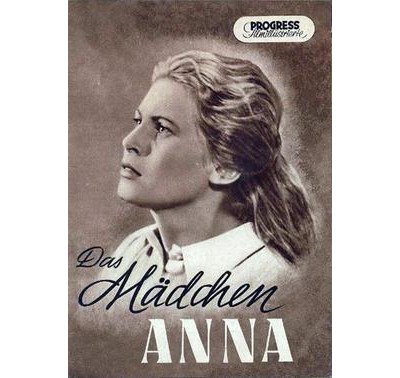
Now a new book lies before us, that sketches a proletarian woman’s destiny. A unique and important book. “Anna” the Novel of a Working Woman by Ivan Olbracht. It is clear: great and lasting works are not first of all a matter of form, but of content, that factual content which puts everyday problems into relief. Vital life interests spur real poetry. And this book understands how to realize revolutionary content in deep artistic form.
The petty, inconspicuous details of everyday life! The pathetic want and shameful suffering, that is the fate of a maidservant, feels its way from this book to touch our conscience. This dark and foreign fate is pushed back by the strength of the collective. The lonely handmaid becomes a comrade, a link in the front of the working class.
In the first part, Anna recalls Baillon’s “Marie”, the delicate and authentic country girl’s book of fate. But Olbracht’s book is more serious in the second part. Slowly the immense, irreversible, tragic laws of the difficulties of worker existence, become a transient order, dependent upon human choice. And Anna herself develops from a timid girl, from a lover and a mother into a revolutionary.
Olbracht does not want to make Anna into a hero. Only into a dramatic center point around which the problems of the collective are grouped. She should only be an atom of the gigantic class mechanism. An atom of the mass destiny, who under the mirror of the poet is analyzed in its original interrelations.
And nevertheless, Olbracht succeeds only partially. Indeed, he features the party, its struggles, victories, and defeats, as well as the collectivity in the factory, the assemblies, streets, and demonstrations. However, the individual destiny does not plunge into the collective, it is not one with the totality. That Anna, who has forgotten the beloved, the child and her hopes of a petty happiness, and who remains only a comrade, in lockstep with the fighting masses of the Czech proletariat, responds more to a wish fulfillment fantasy of the poet, then to a dramatic logical development.
Some years ago, Müller-Glösa attempted to sketch the portrait of a working-class girl, but it was a debacle. It was a cheap translation into proletarian of a cliché novel of dishonest feelings and false perspectives. A novel without artistic ambition and social impact.
Olbracht’s book in contrast, which handles almost the same problems, is an important new appearance in proletarian revolutionary literature, thanks to its ideological and artistic creative force. In its great authentic drive, it is the book of destiny of a working-class woman, a proletarian seized by the enthusiasm of love.
But not the new revolutionary worker in herself.
Her path today is not defined by dedicated loyalty to her beloved and his random political convictions. The path of the new woman, the revolutionary worker woman, leads through the economic struggle, social oppression and political awareness of her own life to the ideas and the struggle of her class.
-
Anna, der Roman einer Arbeiterin. Im Internationalen Arbeiterverlag, Berlin 1929. ↩